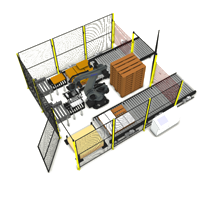
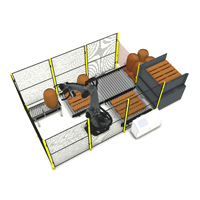
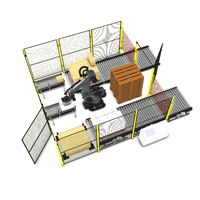
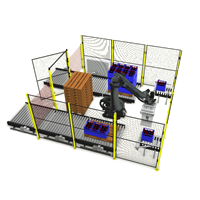
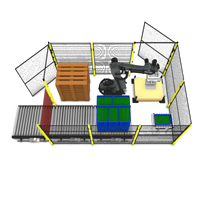
GA15 Robotic Box Palletising Video
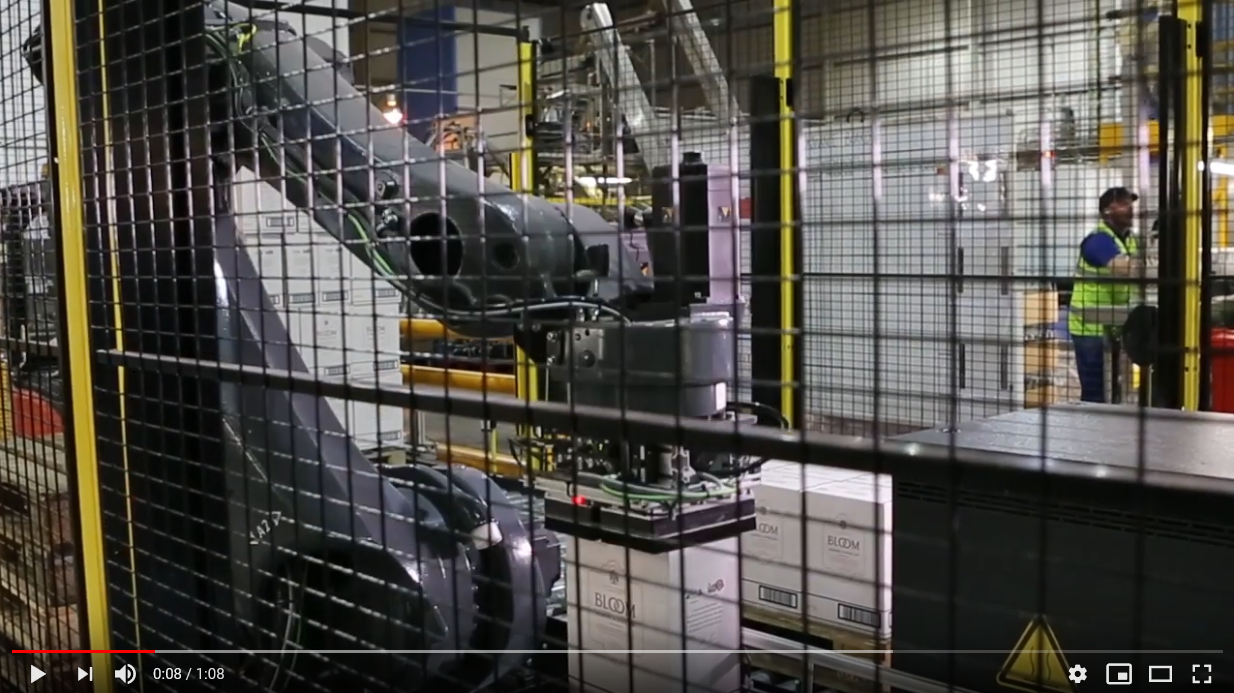
Click here to find out more…
Watch automation videos…
Tel: 01223 499488

Boosting factory output is something that every manufacturing company wants to do as increased output directly translates into increased profits. However, this can often require capital investment, increased staff costs, and increase overheads, which all start to eat into that extra profit you can make by increasing your factory output.
Here we look into some zero cost ways that you can boost your factory output.
Track OEE
OEE (Overall Equipment Effectiveness) is a calculation that can be done to show exactly how effective your machinery or factory is. It takes into account the speed at which the machine or factory runs, the quality of the finished products produced and the actual machine operating time versus the available operating time. OEE is best calculated per machine rather than across the whole factory as it is then easier to identify where improvements need to be made to help improve productivity. An OEE calculator can be downloaded from here.
Once you have identified the OEE of your machinery, you will then be able to identify which parts of your process aren’t running at full efficiency. This will enable you to put measures in place to reduce or eliminate the inefficiencies, and thus improve the efficiency of your machinery.
Hold Daily Improvement Meetings
Daily improvement meetings are key to increasing employee engagement and creating an ownership mentality amongst your staff. Hold a daily whole team huddle and ask each of your staff to name an improvement they made the day before, or to make an improvement suggestion. Don’t limit your staff to just the area they work in, and don’t penalise them if they don’t have an idea to mention for a day or two. What you will find as a result from these daily meetings is that your staff start to take ownership for improving the business and driving better results. They become motivated by the part they have to play in the big picture of improving the business and they enjoy seeing their suggestions taken up. Often you will find that given the ‘rope’ to run with, your staff will come up with some very innovative and creative ways of improving processes.
Some of the ideas that come up in these meetings may also cause you to question some of your processes, and whether they are necessary, or duplicative. This is something that you can then investigate further outside of your daily team meetings.
Brainstorm With Employees
Hold a brainstorm session with your employees on how to boost your factory output. You will find that as your employees are working on the ‘coal face’, they will often have a different view to you as to what is restricting production output, and given the right forum they will often come up with innovative ways to solve these challenges. It may be a machine that’s always stopping, or a process that is not working properly so the process has to be done twice to achieve the desired result. All too often staff working on the factory floor will just work around inefficiencies in the process, and as a manager you may not even be aware of them. That is why it’s so beneficial to give your staff the forum to share their knowledge of these inefficiencies and to work together with them to find solutions.
Create A Daily Scoreboard
Everyone plays to win, and if you want your staff to play their best, they need to know if they’re winning. Involve your staff in creating daily personal or small team targets for their area of the production process. Their targets must be something that is directly influenceable by them, and achievable, otherwise it won’t have a motivating effect. If your staff have had part in creating the target there will be a far higher buy in than if the targets are forced on them.
Once you’ve agreed the targets, all you need is a piece of paper and a pen to create a scoreboard. Depending on the type of target you have agreed, all you need to then do is to update the scoreboard daily or hourly so that you staff can see exactly where they are in relation to their target. You will find that as you staff see their score going up and they can see their success, the pace will speed up and your production output will increase.
Identify Bottlenecks
Identifying and eliminating bottlenecks in your production process is key to improving output. Information on how to identify bottlenecks in your production process is available here. Once you have identified where your bottlenecks are, you will then be able to put strategies in place to ensure that your bottleneck is running at maximum efficiency. Quality checking parts before they enter the bottleneck, reducing the load on the bottleneck, and increasing the capacity of the bottleneck are all ways to exploit the bottleneck.
Once you have identified and exploited your bottleneck, you will often find that the bottleneck moves to another area of your production and you need to go through this process again to exploit that bottleneck.
Reduce Downtime
Reducing unplanned downtime is key to improving production output. Unplanned downtime is usually the result of one of two reasons; machine break downs, or staff breaks.
Machine break downs can be minimised by holding regular preventative maintenance sessions on your machinery. Whilst it may appear inefficient to regularly shut down your production for maintenance, if it is done in a planned manner, you will find there’s less lost production output from this than there would be from unplanned breakdowns.
Staff breaks are the other reason for downtime in a production process. There are two different approaches to minimising downtime from staff breaks, and you will need to decide which method works best for your production process. One method is to ensure that your staff take staggered breaks so that the production process can continue to run constantly. The other method is to ensure that your staff all take their breaks at the same time, for the same length of time. This means that your production process will stop for a set amount of time each day, but it will be predictable and controlled, and you know it will be running efficiently in between these break times.
Stay Organized
Disorganisation can result in many lost man-hours and wasted production time. Ensuring that your manufacturing plant is clearly organised and kept tidy will save many hours of lost production. Make sure every tool, part, or product has a clearly marked place where it should live.
When organising each working area think about how and when the tools or parts are going to be used, and ensure that they are stored in the most efficient place for what they are going to be used for. Think about your manufacturing floor as a whole, is everything in the most efficient place? Is there anything that could be easily and simply moved to improve efficiencies and thus improve production output?
Reduce The Walking
Reducing the walking that your production staff have to do is a basic lean principle of saving wasted time/motion. However, there is a further significant benefit to reducing walking that is not often talked about. When staff have to walk off your production process to get something, they will often be passing other staff on the way, and will often stop for a quick hello or a chat. Before you know it, 5 wasted minutes have passed. If one member of your production process is having a 5 minute chat every 50 minutes, this is reducing your productivity by 10%!
Look at your production process and see what walking is having to be done by your staff. Find ways to reduce the walking or minimise it as far as possible and you will start to see an increase in productivity.
Daily Production Line Audit
Take a daily walk around your production area, and make sure you do this at a different time each day. Before you go for your walk around, take off your managers ‘hat’ and put on your improvements, problem finder ‘hat’; take a view of your production as a whole with no preconceptions. Talk to your staff, find out what’s gone well for them so far today and what hasn’t.
As you do these daily walk rounds you will begin to build up a picture of what is actually going on in the production process and you will start to see where the inefficiencies are and where improvements could be made. It may even make you start to question some of the processes and whether they are necessary of if there could be a better way of doing them.
Identify Wastage
Identifying wastage in your process is key to streamlining and improving your production output. The eight key wastes in lean manufacturing are;
Analyse your production processes, which of these wastes do you have, how can you minimise or eliminate them?
Get New Machinery At No Net Cost To Your Bottom Line
Having worked through all of the above you may find that you need to introduce some new machinery to improve your production process. If this is the case, you need to look for a company that offers finance deals on the purchase of new machinery such as palletisers, bespoke machinery, vision systems, etc. With the right finance deal, you will find that you will be getting more ROI from the new machinery than the repayments on the finance deal. What’s more, with a finance deal there is no need for an initial capital outlay as repayments can be spread over a longer period of time, enabling you to realise the benefit of the new machinery whilst making capital repayments. Try our automation project payback calculator as this calculates ROI as well as showing finance deal options and costs. Download the calculator here.
If you would like to discuss any aspect of this article in more detail then feel free to contact us on 01223 499488.
Watch automation videos…
Find out more…
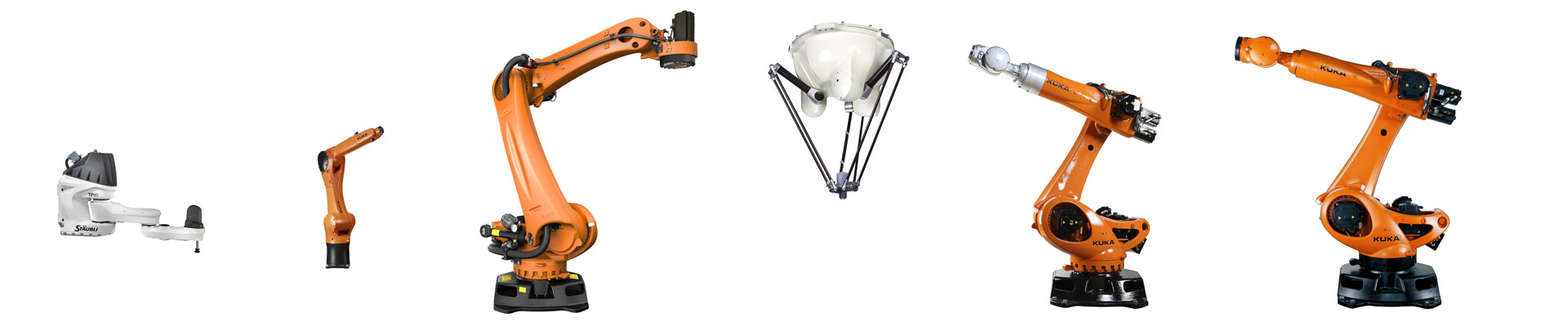
When specifying a robot for an application there are many different things that need to be considered. What space is available? What is the robot going to be lifting? What speeds need to be achieved? What environment is it in? How accurate does the robot need to be when picking and placing the item? These are just a few of the question that need to be answered before you will be able to select the best robot for your application.
The best place to start is to analyse exactly what you want the robot to do. What are you trying to achieve by installing a robot? What space have you got available? What does the throughput need to be to make the project viable?
Below we explain in more detail what the different types of robot are, and what applications they are most suited to.
Collaborative robots
Collaborative robots have been designed to allow a human to work alongside them without the need for guarding. They are typically slower than industrial robots and have a lower payload. However, they have the benefits of force monitoring, and the fact that they often don’t need guarding.
Some of the more common uses for collaborative robots include; pick and place, machine tending, gluing, dispensing, welding, polishing, grinding, de-burring, assembly, painting, coating, dipping.
Introducing cobots to your production process does not only have the benefit of reducing the risk of repetitive strain injuries occurring, but can also have the added impact of reducing wastage of consumables in such as glue, fasteners etc.
Industrial robots
There are four main subcategories of industrial robot, each of which is explained in more detail below.
Robotic Arm
Probably the most common type of pick and place robot is the robotic arm type. They typically come as 5 axis robots for standard pick and place applications in a horizontal plane, or 6 axis robots for more complex applications where the products needs twisting from the horizontal. Robotic arms are able to work with a high degree of accuracy at high speeds, and are able to take high payloads.
Some of the most common applications for industrial robots include: welding, material handling, machine tending, painting, pick and place, packing, palletising, assembly, cutting, grinding, de-burring, polishing, gluing, adhesive sealing, and spraying materials.
Cartesian Robot
Cartesian robots are also known as linear or gantry robots. They are a very common type of pick and place robot that used to be cheaper, but is now not so commonly installed apart from for injection moulding machine applications. The advantages of a Cartesian robot is that they have high positional accuracy and can handle heavy loads. However, the disadvantage of a Cartesian robot is that movement is limited to only one direction at a time.
Applications that suit Cartesian robots include pick and place operations, loading and unloading, material handling, assembly and sub-assembly, and adhesive applications.
Delta Robot
Delta robots are mounted above the workspace and are typically used for high speed pick and place, or product transfer applications. The advantages of delta robots are their high speed and high operational accuracy.
Scara Robot
Scara robots, also known as fast pick robots, are an excellent option for fast pick and place applications; with cycle times as fast as 150 cycles per minute. Fast pick robots can also be used in packaging and assembly processes as well.
Robot Grippers
As robots can handle such a wide variety of products, the gripper on a robot is usually custom made to suit the application. However, there are four main types of gripper; vacuum, pneumatic, hydraulic and servo-electric.
Watch automation videos…
 What Is A Palletiser?
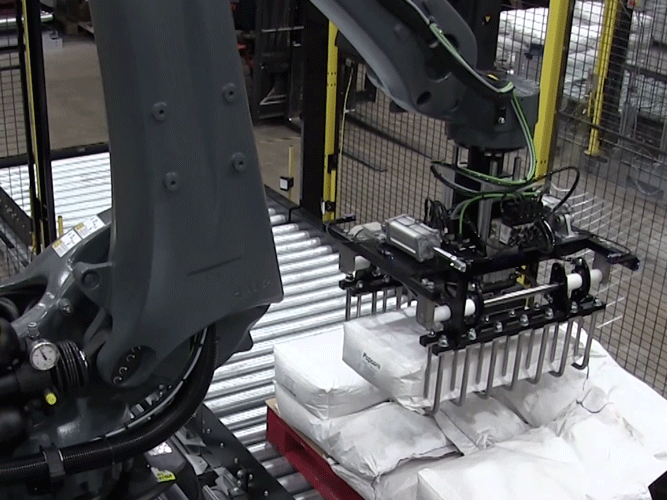
A palletiser is an automated machine or system that stacks products onto pallets. Palletisers can be robotic or mechanical and goods will usually be palletised either as a complete layer or as individual products.
What Are The Advantages Of Automated Palletising?
Automated palletising brings many different advantages. Some of these are explained in detail below.
Reduces the risk of repetitive strain injury
Manual palletising processes carry a high risk of repetitive strain injury. This is due to the fact that when a pallet is being stacked by hand, there is a large amount of manual handling involved that is very repetitive in nature. An automated palletising system will remove the manual handling element of the palletising process and will completely eliminate the risk of RSI.
Eliminates potential bottlenecks
If product coming off the production line is not able to be manually palletised as quickly as the optimum running speed of the machine, the palletising process becomes the bottleneck in your production process. An automated palletising system will remove this bottleneck as it can be designed to run at the speeds that are suited to the optimum production rate of your line. If your production line is otherwise fully automated, having an automated palletiser at the end of the production line also enables you to run your production unmanned 24/7, thus increasing the amount of product you can produce.
Improves production speed and eliminates downtime
With an automated palletiser, production speeds can also be increased. This is due to the fact that your palletiser can be programmed to pick and place goods onto pallets at the speed that is best suited to your production process. In a manual palletising process, production often stops whilst your staff stop for coffee breaks, chats and lunch. This immediately reduces your production output by the quantity of product that could have been produced during this time. With an automated palletiser at the end of the line, production can continue to run throughout break times, thereby enabling you to improve your production speeds. On average there is a 40% improvement in production speeds when automated palletising is introduced as the palletising of products is not stopping or slowing down when your staff stop for a break or a chat. An OEE calculator is a very helpful tool to use to find out if your process is running at the optimum speed.
What Are The Disadvantages Of Automated Palletising?
As automation advances, there are becoming fewer and fewer disadvantages of automated palletising. There are however still a few areas that may be considered as disadvantages, but virtually all of these can be overcome.
Products are irregular in size and shape
For some palletising systems this may still present an issue to automating the palletising process. However, with the various developments in technology, mixed case palletising is now a possibility. Also, with the many developments in gripper technologies, there are now very few products that cannot be automatically picked and placed onto a pallet. Quick and easy programming software that can be set by your factory staff also overcomes this issue as it is very quick and easy to change the stack configuration without having to call in a specialist programmer.
Capital expenditure
As with any machinery or system, there is always the need for an initial capital outlay. However, there are some companies that will now offer a try before you buy scheme. The free trial service gives you the opportunity to see how your product would work on an automated palletising system before you commit to the capital expenditure. This means that if for some reason you find that automated palletising doesn’t work for you, you don’t lose the capital you have spent on it and don’t end up with a redundant system clogging up your factory floor space. Finance schemes are also available and these typically cost less per month than the savings you are making on a monthly basis by having automated your process.
Downtime during installation
Downtime during installation can cost a lot to your company, particularly if you’re running a process where you are producing high volumes of product per hour. If you are currently manually palletising the product, downtime during install may not be as much of a problem for you as those that are replacing an existing automated palletising system. The Granta GA15 palletising system is the answer to this, as the system is modular and can be installed in a day which vastly reduces the downtime required.
What Do I Need To Consider When Installing A Palletiser?
What will the payback be?
When considering installing a palletiser it is always useful to calculate the payback that this will give you. We have developed an automation payback calculator that is available for download as part of our Robotics and Automation Resources Pack https://www.granta-automation.co.uk/freepack .
Whilst this automation payback calculator enables you to calculate the value of the tangible benefits of installing a palletiser, it can often be useful to also calculate the value of the intangible benefits. An intangible benefits calculator is also included in our Robotics and Automation Resource Pack and can be downloaded here https://www.granta-automation.co.uk/freepack.
What if my production process changes and I no longer need a palletiser?
In some industries, certain products have a very short life cycle, and with the short life cycle of the product, investing in a palletising system can seem very costly and inefficient. However, if you choose your palletising system carefully, it will be possible to easily re-deploy the palletising system to another line once the life cycle of your product is ended. Key things to look out for are programming software that doesn’t require a specialist to program the palletiser, and modular systems that don’t leave your factory floor in a mess when you uninstall and reinstall the system.
If you would like any further help on palletisers, please contact us on 01223 499488 or helpline@granta-automation.co.uk.
Watch automation videos…
 In January we all tend to review the previous year to see how we can improve this year, so these Quick Wins on how to reduce your production overheads should come in useful!
The first category outlines ways to directly reduce your overheads, whilst the second and third categories are items that are often not thought of as directly relating to reducing overheads but do indeed have a significant impact.
Reduce Overheads
There are several simple steps you can take to reduce your overheads, many of which do not need any capital outlay to introduce.
Increase Productivity
Increasing the productivity of any machine or indeed your whole production process will have a positive impact on your net profit. This short video explains why productivity is so important.
Below are some proven methods that will enable you to increase your productivity.
Reduce Production Costs Per Hour
Whilst this many not be an entirely obvious method for reducing your overheads, reducing your production costs per hour does have a direct impact on overheads. The money you save in the production of the products that you sell converts directly to an increased profit.
Reducing production costs can be done in a variety of different ways, some of which have been outlined below:
As you can see, reducing overheads does not need to be a costly exercise. Often some of the simplest activities can have a significant impact.
Feel free to contact us on 01223 499488 or helpline@granta-automation.co.uk if you require any further information or would like to discuss any of these concepts further.
Watch automation videos…
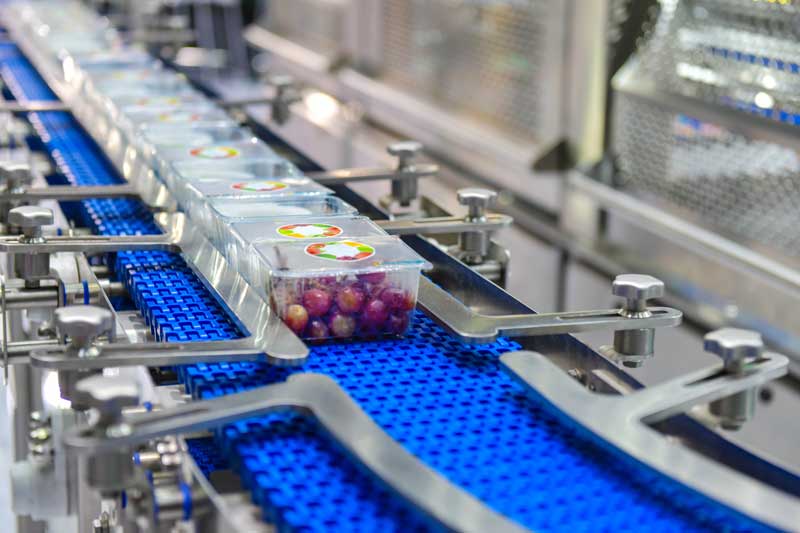 Automated packaging of products can bring many benefits to your company. Some of these benefits are obvious, tangible benefits, and others are more intangible, but nevertheless equally beneficial to your company and your bottom line profit.
Automated packaging of products can mean many different things to different people and your interpretation depends entirely on the market you are in. For some it may mean the packaging of food into containers, or liquids into bottles; whereas for others, it may mean the binding together and wrapping of large sheets of material. With this diversity of product, automated packaging systems are also very diverse, and often have to be bespoke made to meet a company’s requirements.
Whilst these is often the need to package each individual product, there is also often the need to further box and palletise these products to make them ready to ship. When this process is automated, it can also be referred to as automated packaging.
Let’s start by looking into some of the tangible benefits of automated packaging;
Reduces The Risk Of Repetitive Strain Injury
Repetitive strain injury risks are lowered when products are packed automatically rather than manually. This is due to the fact that automation removes the need for human input to complete repetitive manual tasks. Not sure how high the risk of RSI is in your process? Download our repetitive strain injury risk assessment form and find out now.
Eliminate Potential Bottlenecks
Manual packaging processes can often lead to bottlenecks within a production process when human errors occur. Automated packaging processes can help to eliminate this bottleneck as a bespoke machine will be designed to keep up with the flow off the production line. With automated packaging there is also less scope for packaging errors, which in turn leads to less downtime and bottlenecks.
Improved Production Speed
Automating your packaging process can lead to improved production speeds. Often when there is a manual packaging process, the machine producing the product is not able to run at full capacity as the manual packaging process is not able to keep up with this level of output. By automating the packaging of the products you are then able to remove this constraint and improve your production speed.
Eliminate Downtime
As with any process involving manual labour, staff are entitled to breaks. Often in factories this means that production stops during these breaks resulting in downtime and loss of production. With an automated packaging solution, these breaks no longer happen, and the machines can be run 24/7 if required.
To find out more about the tangible benefits of automated packaging, download our automation payback calculator here.
Intangible benefits are harder to define, but below are some of the more common intangible benefits:
Increased Staff Morale
Factory staff packaging products are often working relatively long hours on repetitive tasks that quickly become mind numbing and boring. As the boredom sets in, the pace unintentionally slows and very quickly the production output can settle to a pace that is a lot less efficient and effective than it could be. Also, when staff are bored and only half concentrating on the job at hand, mistakes start to happen, which can then result in product defects or health and safety issues etc. If repetitive jobs, such are packaging of products, are automated then staff can be re-deployed to other areas of the business that are less mundane; which in turn creates more engagement and job satisfaction.
Increased Sales Due To Reduced Product Cost
Whilst there is the initial need for capital outlay when introducing an automated packaging system to your process this needs to be considered carefully. It is important to calculate what your current costs are in terms of production speeds, staffing costs, product defects, RSI claims, etc. Without a complete picture of your current cost, and a knowledge of the added value of increased production speeds that an automated packaging system would bring, it is impossible to get a complete picture of how quickly your capital investment will pay for itself. Introducing an automated packaging system usually results in reduced product cost and the capacity to manufacture more products, thus creating more product to sell and resulting in increased profit on your bottom line.
Better Customer Service
With an automated packaging process the risk of product defects and recalls is significantly decreased. This along with the increased production capacity enables you to give your customers a better service. As we all know, better customer services results in more loyal customers and repeat business bringing greater profits to your company.
To find out more about the intangible benefits of automated packaging, download our intangible benefits calculator here.
Although we have only covered a few of the benefits of automated packaging, as you can see, there are many visible benefits as well as hidden benefits of automating this process. If you would like any help in calculating the value of these tangible or intangible benefits, feel free to contact us on 01223 499488 and we will be very happy to help.
Watch automation videos…
Find out more…
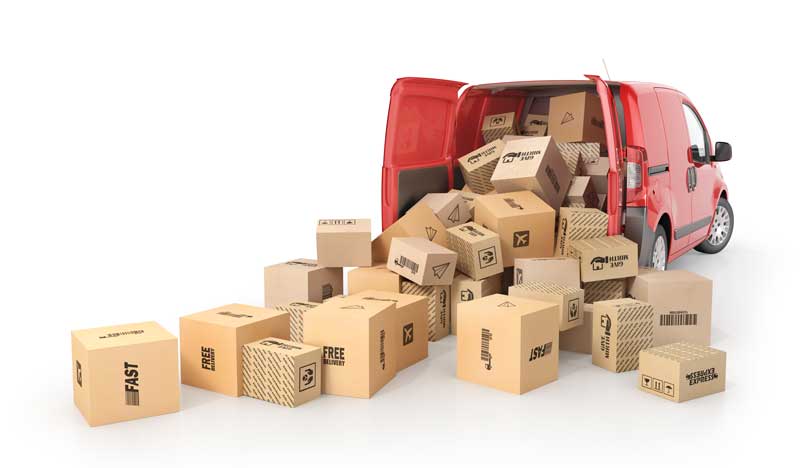
As we all know, the end of year rush always brings its challenges with it! Too many goods to get out the door, staff having to work overtime to fulfil customer requirements. Machine break downs just when you really could do without them, and then to crown it all, some of your workers are having to take sick leave due to repetitive strain injuries.
Then the end of year arrives, we all take our well-earned breaks and by January, the chaos of December has been forgotten. Life settles back into a sensible pace and production carries on as usual but, before we know it, the end of the year is upon us again and we’re back in the whirlwind of chaos. It’s a difficult cycle to break…
So How Do You Break Free From This End Of Year Whirlwind?
There are many contributing factors here that need to be considered, some are internal influences and some external. In order to bring calm to the chaos, it is important to be able to identify what exactly is causing the chaos. Take a step back, start to look at where the main bottleneck is in the workflow. If you are not familiar with identifying bottlenecks in the workflow you may find this article useful https://www.granta-automation.co.uk/news/how-do-i-identify-a-bottleneck-in-my-production-process/ . Once you have identified the bottleneck it is important that you do everything you can to exploit the bottleneck, and to ensure that the bottleneck machine or process is working to maximum efficiency. You will likely find that as you fix one bottleneck, another bottleneck arises. However, this is to be expected, and identifying bottlenecks in your process should be a continuous process as it allows for continuous improvement.
What If My Bottleneck Is People?
If you’re bottleneck relates to people, it is important to analyse why. Is the production stopping whilst they have breaks? Is the production rate slowing as their shift draws to an end? Is RSI causing an issue?
There are many questions that can be asked, and it is also very important to be get answers to these questions, as with an accurate understanding of why people are causing a bottleneck, you are half way to finding a solution.
Sometimes your solution can be as simple as introducing methods to boost your staff morale and keep the pace up, whereas other times it may be more beneficial to introduce automated systems to increase productivity and to re-deploy your staff to more profitable roles throughout your company.
How Do I know How Productive My Processes Are?
Knowing how productive your machinery or processes are plays a very important part in being able to increase your throughput. If you measure and keep a record of your efficiencies, you will quickly be able to see how changes you have made as a result of exploiting bottlenecks have affected your overall productivity. To help you with this, we’re created a couple of calculators https://www.granta-automation.co.uk/news/2-ways-to-measure-the-productivity-effectiveness-or-efficiency-of-your-machinery-or-factory/
Now you can look forward to a calm and prosperous year end next year!
Watch automation videos…
How do I palletise? How do I stack products on pallets? What does palletise mean? All these questions are answered in this article which covers a range of the common types of palletising – both automated and manual.
What Does Palletising Mean?
Palletising is simply the act of stacking products onto pallets. This is typically to make the product easy to transport.
How Do I Palletise Products?
There are really 3 main ways of palletising:
Manual Palletising
This is where people simply stack products onto pallets by hand. This process is very common especially where there are random or irregular shaped products that need stacking.
Semi Automated Palletising
This is where there is a certain level of automation to assist someone manually stacking pallets. For example;
Automated Palletising
This is where the process of palletising is carried out with entirely automated machinery. This is often a robotic palletising system or an overhead gantry palletising system. Even within automated systems there are certain levels of automation but the most advanced systems can be quickly re-programmed by a non-skilled operator.
If you want any further information on palletising, view our robotic palletising page here.
Watch automation videos…
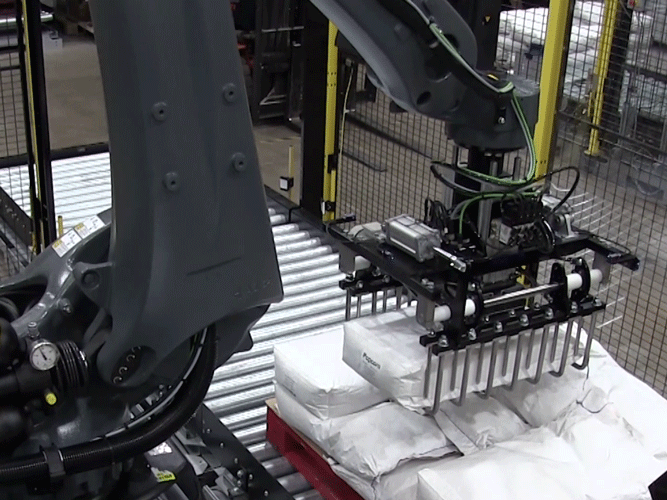
What is a Palletiser?
Palletiser is a term used in the machinery automation industry to describe an automated machine or system that stacks product onto pallets.
There are many different types of palletising systems available on the market from basic box and carton palletisers, through to bag palletisers, barrel palletisers and mixed case palletising. They all have some sort of robotic system that is programmed to pick the incoming product off a production line and place it onto pallets.
Some systems form the product into layers than place whole layers on to pallets, other pick products individually and place them onto pallets. There are many different considerations for specifying a palletiser such as; production speed, range of product types and sizes, weight of products, type of packaging, what type of gripper is needed, etc.
The entry level robotic palletisers are often a basic two station system where the robot has two pallet stacking positions so it can stack these two pallets, and then a member of staff can remove the stacked pallets with a forklift through a safety light curtain or by opening a safety gate. The advanced systems have multiple lanes and automatic pallet feeding. Automatic pallet feeding means that the production can keep running continuously as the pallets will move through the system on conveyors and the stacked pallets will be automatically moved to outside the safety area ready for forklift operators to remove the pallets.
Programming of palletisers is a very important part of the system, often robotic palletisers required skilled robot programming engineers to set them up. The most advanced systems have completely automatic programming where you simply build a 3D model of your pallet using simple user-friendly software and then the system programmes itself (e.g. GA15 series robotic palletiser). The advantage of this advanced software is that you keep control of your system in house and it reduces the cost of expensive robot programmers every time you need to change your palletising layout due to a new product.
Watch this video to see a palletiser with advanced programming software.
Granta usually recommend the GA15 series palletising system which is a modular robotic palletising system. Being modular it can be easily adapted for almost any palletising application and it is easy to add extras such as; slip sheets, pallet feeding, stretch wrapping, barcode reading, label application and other bespoke modules. The GA15 series palletiser also has advanced easy programming software which enables you to design your stack pattern in 3D then it automatically programs the robot.
If you unsure if a palletiser is right for you at the moment, Granta also offer a free trial for you with your product, simply ship a pallet to us and we will run a demonstration for you.
Watch automation videos…
Calculating ROI is needed to validate any project but often this is not as easy as it appears on the surface.
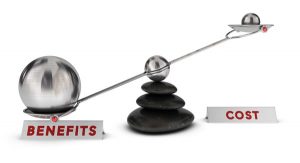
Often companies start and stop by thinking in terms of ‘how much paid staff time will this project save me?’ E.g. this project may save me 1 salary at £30,000 per year, we want 5 years payback so max project value that is justifiable is £150,000.
Some companies dig a lot further into other tangible payback areas such as:
For help with calculating the tangible benefits of your project try using our payback calculator www.granta-automation.co.uk/automation-project-payback-calculator
Rarely do companies put a value to the intangible benefits of projects such as:
Then there are the intangible risks of not carrying out the project to consider as well, e.g if I don’t go ahead with the project:
So how do I calculate the value of these intangible benefits?
Essentially the aim is to somehow make the intangible tangible, and there are several methods that can be used;
1. Process of elimination
This is really a cheat method and not defined or accurate but is simply a process of starting with the balance between required payback and tangible benefits and evaluating if you feel the intangible benefits easily cover the difference? Obviously in many situations the tangible benefits are enough to justify the project without the intangible benefits anyhow or the difference is so small that the intangibles are clearly worth more than the difference.
Worked example:
£200,000 project cost
4 year payback period
Therefore at least £200,000/4 = £50,000 per year of benefits needed to justify the project.
Tangible benefits:
By eliminating the tangible benefits the balance needed to justify the project is £5,000 per year of intangible benefits to justify the project
Intangible benefits:
It is clear to management that these intangible benefits are worth more than £5,000 so they go ahead with the project.
2. Weighted estimation
This is the most common method and is very similar to the risk assessment processes used for assessing health and safety risks. Each of the intangible items is listed. An estimated saving/cost in £ is assigned to each of the list items as to what they are estimated to be if they did happen. A percentage likelihood of the intangible happening is assigned to each of the list items. Finally the estimated saving/cost is multiplied by the % likelihood to give a monetary value to the intangible items.
Worked example:
Intangible benefits if we were to automate
| Intangible | £ if it did happen | Likelihood of it happening | Weighted estimated intangible benefits value |
| Less staff sickness due to improved H&S | £1,000 | 50% | £500 |
| Increased sales due to improved product quality | £10,000 | 70% | £7,000 |
| Increased sales due to the extra marketing and sales opportunity automation will bring | £3,000 | 30% | £900 |
| Improved staff output due to improved staff morale | £1,000 | 50% | £500 |
Intangible risks if we didn’t automate
| Intangible | £ if it did happen | Likelihood of it happening | Weighted estimated intangible risks value |
| H&S claims due to RSI | £5,000 | 30% | £1,500 |
| Poor staff morale causing staff turnover and/or poor performance | £3,000 | 80% | £2,400 |
| The competition may automate at some point improving quality and price meaning we are no longer competitive | £20,000 | 25% | £5,000 |
3. Comparative analysis
This is where you compare intangibles with previous scenarios that have put a value to an intangible and then compare them to give them a defined value. This method is commonly used in valuing intangible business assets such as brand names and patents. If other companies have previously sold similar brand names or patents, then the price of these can be used to establish a price for your own brand name or patents. An example of this in relation to automation project intangible benefits could be to compare to another automation project you have completed in your factory, or to compare with case studies from other companies that have automated.
Examples:
Less staff sickness due to improved health and safety – could be compared with how much staff sickness you have in this non automated process vs another automated process in your factory.
Increased sales due to improved product quality – could be compared with how much sales improved for another similar product when you improved it. Or it could be compared with how much your sales have dropped due to your competition improving the quality of their product.
Download our FREE intangible benefits calculator to help you calculate the value of intangible benefits.
Watch automation videos…