›About Granta & our values
Who are Granta Automation?
Granta Automation is one of the UK's most experienced robotic palletising specialists and a KUKA Platinum and Yaskawa partner. Established in 2006 and based in Linton, Cambridge, we design, build, install and support end-of-line automation for manufacturers across the UK and Ireland.
What does Granta specialise in?
We specialise in palletising and end-of-line automation - robotic, compact, cobot and prebuilt palletisers, plus container unloading, depalletising, cross-stacking, AMRs and AGVs. Focusing on palletising means real depth of expertise rather than a little of everything.
What is Granta's core purpose?
We help companies and people achieve with automation - strengthening the heart of the economy and making a positive contribution to many people's lives.
What are Granta's company values?
Helpful, Expert, Reliable and Quick. These came directly from asking our customers what they think of when they think of Granta - so they reflect how we actually work, not just what we aspire to.
What does 'Helpful' mean at Granta?
We are helpful to all, with a positive attitude of respect, humility and happiness.
What does 'Expert' mean at Granta?
We are proficient, highly skilled and competent in all we do.
What does 'Reliable' mean at Granta?
We hold integrity, honesty, loyalty, meeting our promises and high product quality as our key reliability standards.
What does 'Quick' mean at Granta?
We are quick and efficient in thinking, responding and producing results - but never at the expense of quality.
Where is Granta based?
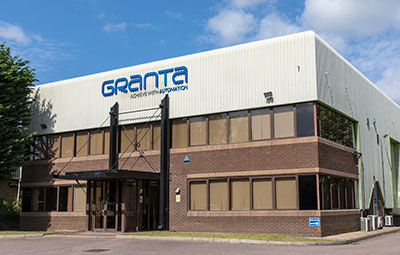
Cambridge Road, Linton, Cambridge, CB21 4NN. We have our own design, build and assembly facilities.
What areas do you cover?
We work with manufacturers throughout the UK and Ireland, with nationwide installation and support.
›Why Granta - what makes us different
What makes Granta different from other palletiser suppliers?
We offer the complete range and match the right system to your line rather than pushing one product; our programming software is patented and set up by your own operators in minutes; we're a top-tier partner of both KUKA and Yaskawa; and we back everything with in-house UK support. That combination of range, ease of use, partnerships and support is hard to match.
Is Granta a KUKA partner?
Yes - Granta is a KUKA Platinum system partner, KUKA's highest partner tier.
Is Granta a Yaskawa partner?
Yes - we're a Yaskawa partner and use Yaskawa robots across many of our systems. We choose KUKA or Yaskawa depending on which best suits your application.
What robot brands do you use?
KUKA or Yaskawa, depending on the system - both are world-leading, fully supported industrial robot platforms.
Is your technology patented?
Yes - our modular palletiser system and our easy-programming software are both patented.
Why choose a palletising specialist rather than a general integrator?
Because palletising is all we do, we've solved a huge range of product, pattern and layout challenges before, our systems are refined and standardised, and our lead times and support reflect that focus.
Do you offer a free trial?
Yes - send us your product and we'll set a system up and show you it being palletised, so you have proof before any commitment.
Can I see a system before buying?
Yes - we can arrange a demonstration, a free site visit and feasibility assessment, and share videos of our systems running.
Are your systems good value?
Yes - we aim to give you the best possible solution for your needs at the best possible price, and we're typically competitive against comparable suppliers, with finance options on every quote.
Do you sell internationally?
Our focus is the UK and Ireland, where we can provide the fast installation and responsive in-house support our customers value.
›Our experience & the company
How long has Granta been established?
Since 2006 - nearly two decades specialising in palletising and automation.
How experienced is your team?
We're a stable, experienced team, with several people who have been with us since the very start in 2006 and many long-serving engineers - so you benefit from deep, retained know-how.
How many systems do you work on at once?
We typically have around 15–25 palletising projects in progress at any one time - and we order our robots in batches of 25, which reflects the scale we operate at.
Do you have wide industry knowledge?
Yes - we've delivered systems across food and beverage, distribution and haulage, agriculture and feed, construction products, pharmaceutical and medical, and chemical sectors, handling a huge variety of products.
Are you financially established and reliable?
We're an established, recognised UK automation business with our own premises, a full engineering team and long-standing manufacturer partnerships.
Is Granta a growing company?
Yes - we continue to grow our range (cobot, compact, AMRs) and our install base, and we're increasingly recognised as a leading UK palletising brand.
›The palletiser range & choosing a system
What types of palletiser do you offer?
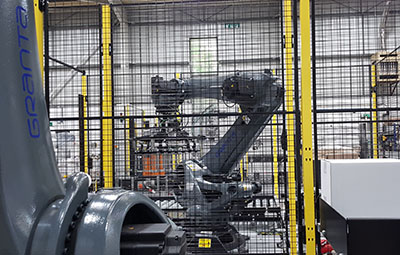
Three core palletising systems - the cobot palletiser, the compact palletiser and the modular palletiser - plus a standardised prebuilt palletiser, container unloading, depalletising, layer forming, AMRs and AGVs.
Which palletiser is right for me?
It depends on your speed, available space, product and budget - and we'll advise honestly. As a guide: a cobot suits lower speeds and shared spaces; a compact suits high speed in a small footprint with pallet-truck take-off; and a modular suits flexibility, growth and the widest range of applications.
What's the difference between the cobot, compact and modular systems?
The cobot is collaborative and can run without guarding; the compact is a high-speed industrial-robot system in a very small footprint with pallet-truck take-off; the modular is a fully flexible, reconfigurable industrial system built from standard plug-and-play modules.
Can you handle high-speed lines?
Yes - the compact and modular systems run at high speed (industrial-robot speeds), and can include row gripping to pick multiple items at once for higher throughput.
What if I have very little space?
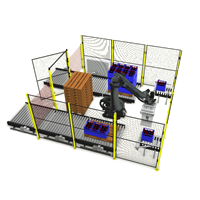
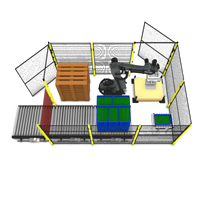
The compact palletiser is designed specifically for limited space, with a very small footprint, low-profile conveyors and pallet-truck take-off - no forklift access needed.
Can a system grow or change with my business?
Yes - the modular system is designed to be reconfigured and extended as your needs change, so it's genuinely future-proof.
Do you offer single and double lane systems?
Yes - many of our systems are available as single or double infeed / single or double lane configurations to suit your line.
Can one system handle several products or lines?
Yes - systems can take single or double infeeds and store multiple stack patterns, so one cell can serve more than one product or line.
›Cobot palletiser
What is a cobot palletiser?
A collaborative robotic palletiser that can work safely alongside people. It uses a sturdy, industrial-grade 30 kg-payload collaborative robot designed for 24/7 use, with easy programming and a choice of grippers.
What payload does the cobot handle?
The cobot uses a 30 kg-payload collaborative robot.
Can the cobot run 24/7?
Yes - it's a sturdy, industrial-grade cobot designed for round-the-clock use.
Does the cobot need guarding or fencing?
It's available with or without guarding. It can run fully collaboratively with no fencing, or at higher speed with guarding or safety scanners.
How does the cobot work without any guarding?
In the no-guarding configuration it runs in collaborative mode all the time - no guarding, light curtains or safety scanners - with single or double infeed and single or double pallet positions.
How does the cobot with guarding work?
It has guarding around the cell with a light curtain for entry. It runs at full industrial-robot speed, and automatically slows to collaborative speed if the light curtain is broken.
How does the cobot with an area scanner work?
Safety area scanners monitor the cell. The robot runs at full industrial speed and slows to collaborative speed whenever the scanners detect movement in the safety zone.
Is the cobot quick to install?
Yes - the cobot palletiser is quick to install and, like all our systems, programmed by your own operators.
What products can the cobot palletise?
A wide range - boxes, cases, bags and more - using a choice of gripper options to suit your product.
›Compact palletiser
What is the compact palletiser?
A high-speed palletiser built for applications that need an industrial robot but have limited space and require pallet-truck take-off. It has a very small footprint, low-profile conveyors and a 140 kg-payload robot.
What payload does the compact system use?
A 140 kg-payload industrial robot.
Why is the compact palletiser special?
Pallets can be removed with a pallet truck rather than a forklift, and pallets feed automatically through the system - giving high-speed running in a very compact footprint, ideal where space is tight or forklifts aren't allowed.
Can the compact palletiser change pallets while running?
Yes - the auto versions have low-profile out-feed conveyors so finished pallets are removed while the robot keeps running, with new pallets fed in automatically.
What are the three compact palletiser options?
Static (load a new pallet as needed while running, with manual take-off through a gate); Auto (finished pallets exit on low-profile conveyors while the robot keeps running); and Auto with Pallet Feeder (fully automatic pallet feeding and flow through the system).
What is the static compact palletiser?
The simplest option - you load a single new pallet as required while the robot runs, and remove full pallets manually through a gate with a pallet truck or forklift. The system pauses while a full pallet is removed. Available single or double lane.
What is the auto compact palletiser?
It has low-profile out-feed conveyors so full pallets are removed with a pallet truck or forklift while the robot continues running, with new pallets fed in as needed. Available single or double lane.
What is the compact palletiser with pallet feeder?
It adds fully automatic empty-pallet feeding and fully automated pallet flow, so the robot runs continuously and full pallets exit on low-profile conveyors. Available single or double lane.
Can the compact system pick multiple items at once?
Yes - row gripping can be included to increase throughput, and slip sheets and auto pallet feeding can be added to any layout.
›Modular palletiser
What is the modular palletiser?
Our flexible, fully configurable industrial palletising system, built from standard plug-and-play modules. It's very quick to install and reconfigure, with short lead times - the 'Lego' of palletisers.
Why is the modular system called future-proof?
Because it's built from standard modules you can rearrange, extend and reconfigure as your production changes - it grows with your company rather than being fixed.
How does the modular system work?
It uses 1.58 m square platform modules with all components plug-and-play for quick installation, an integrated cable channel in each platform, and guarding that fixes straight to the platform.
Is the modular system patented?
Yes - both the modular system and its easy-programming software are patented.
What modules are available?
A wide range of standard modules, including infeed conveyors, double infeed, square rollers and sack pick, under-grip conveyor, robot, infeed bump turn, pallet feeder, layer former, pallet transfer unit, pallet infeed and slip-sheet stacks, pallet turner, pallet conveyor and more.
Can the modular layout be customised?
Yes - layouts are configured to your requirements from the standard modules, so you get a tailored system built from proven, standardised parts.
Is the modular system quick to install?
Yes - plug-and-play modules make it very quick to install and reconfigure, which also keeps lead times short.
›Prebuilt palletiser
What is the prebuilt palletiser?
A standardised, fully tested palletiser you can install yourself with step-by-step instructions - a fast, lower-cost route into robotic palletising for simpler box applications.
How much is the prebuilt palletiser?
It's openly priced from £57,900 + VAT - unusual in a market where prices are normally only 'on application'.
What does the prebuilt system handle?
It uses a 140 kg robot with a vacuum foam-pad gripper and handles boxes up to 25 kg at up to eight a minute.
How is the prebuilt palletiser installed?
You install it yourself following clear step-by-step instructions, with a typical lead time of one to two months.
Who is the prebuilt palletiser best for?
First-time automators and simpler box applications who want a proven, low-cost, quick-to-deploy system.
›Container unloading
Do you offer automated container unloading?
Yes - we're the UK specialist in automated container unloading. A boom conveyor extends into the container, the product is loaded onto it and conveyed to the palletising cell, where it's automatically palletised.
How does the container unloading system work?
A boom conveyor reaches into the container; product is placed onto it and conveyed to the palletiser, which stacks it automatically at the far end.
Can container unloading handle different box sizes?
Yes - with our auto-programming option the system automatically measures boxes and creates palletising programs, so it copes with the mix of sizes a real container holds.
What extras can be added to a container unloading system?
Custom extras such as pallet stretch-wrapping, labelling and automatic pallet feeders, plus auto-programming for automatic box measuring and program creation.
Why is container unloading a big opportunity?
A great deal of container unloading is still done by hand - heavy, slow work that's hard to staff. Automating it removes one of the last major manual jobs in many operations.
›Depalletising & cross-stacking
Do you offer depalletising?
Yes - most of our palletiser types and cell layouts can be run in reverse to depalletise product onto a production line, into a container, or for other depalletising applications.
Can you cross-stack between Euro and UK pallets?
Yes - a common use of a depalletising cell is re-stacking from Euro pallets to UK standard pallets, or from pallets onto a production line.
What if the incoming stacks are untidy?
If stacks are poor quality, compensator tools can be used on the robot and alignment systems can accurately re-position the product before it's re-stacked.
Is every depalletising job the same?
No - there are many options to consider, so each depalletising system is designed to suit your specific requirements.
›What we can palletise - grippers & products
What products can Granta palletise?
If it goes on a pallet, we can usually handle it - boxes and cases, bags and sacks, trays, barrels, and many awkward or delicate items - by matching the right gripper to your product.
What gripper options are available?
A wide range, including bag grippers, vacuum and foam-vacuum cup grippers, row grippers (vacuum, foam and under), the under-gripper, vacuum bag grippers, layer grippers, barrel grippers, side-plate grippers and bespoke grippers.
Can you palletise bags and sacks?
Yes - we have dedicated bag and sack grippers and square-roller sack-pick modules for reliably handling bagged products such as feed, aggregates and chemicals.
Can you palletise open trays or delicate products?
Yes - the under-gripper supports product from beneath, making it ideal for open trays, unstable or delicate items that can't be gripped conventionally.
Can you palletise barrels or drums?
Yes - a dedicated barrel gripper is available for cylindrical products.
Can you handle a whole layer at once?
Yes - a layer gripper and layer-former module allow complete layers to be formed and placed for high-throughput applications.
What if my product is unusual?
We design and build bespoke grippers when needed, and offer a free trial so we can prove the handling on your actual product first.
Can one system handle several different products?
Yes - the software stores multiple stack patterns and your operators can switch between them in minutes, so one system can run many products.
›Industries we serve
Which industries does Granta serve?
We actively serve food and beverage, distribution and haulage (container unloading), agriculture and feed mills, construction products, pharmaceutical and medical, and chemical - and we're happy to help any industry that needs palletising.
Do you work with food and beverage manufacturers?
Yes - food and beverage is a core sector for us, palletising cases, trays, bottles, cans and more, with hygienic and BRC-aware system design.
Do you work with agriculture and feed mills?
Yes - we palletise bagged and sacked products such as animal feed, seed and aggregates, using robust bag grippers built for heavy, repetitive sacks.
Do you serve the construction products industry?
Yes - we palletise building and construction products, including heavy and awkward items, matching the gripper and pattern to the product.
Do you work with pharmaceutical and medical manufacturers?
Yes - we deliver palletising for pharmaceutical and medical products, with the compliance, documentation and care those sectors require.
Do you serve the chemical industry?
Yes - we palletise chemical products including bagged and drummed goods, with appropriate handling and safety design.
Do you help distribution and haulage operations?
Yes - particularly with automated container unloading and palletising, which removes one of the most labour-intensive manual jobs in distribution.
My industry isn't listed - can you still help?
Almost certainly - if your product goes onto or comes off a pallet, we're interested. Those sectors are simply where we're most active.
›Programming & software
Is the palletiser easy to program?
Yes - our easy-programming software lets you set up a new stack pattern in about five minutes, with no programming or robot skills required.
Who programs the palletiser?
Your own operators. There's no need for a specialist robot programmer, which removes a lot of cost and inconvenience.
How does Granta's programming compare with a conventional system?
A conventional system typically needs 2–3 weeks for initial set-up and 1–2 days per new stack pattern using a trained programmer. A Granta system is typically 3–5 days to set up and about five minutes per stack pattern, done by anyone.
Does the software work out the best stack pattern?
Yes - it automatically generates and optimises patterns for space efficiency, and you can pick from a list of standard patterns or drag-and-drop your own.
Can I store multiple stack patterns?
Yes - you can keep a library of standard patterns and select the one you need, making product changeovers quick.
What is auto-programming?
An advanced option on top of our patented software: a laser measuring system automatically measures the product and creates the stack program, with auto size-error checking and minimal human input - you just name the new program and the software does the rest.
Do I need any robot skills to run the system?
No - the software is designed so that anyone can create and change stack patterns without programming or robot knowledge.
Is the software patented?
Yes - our easy-programming software is patented, as is our modular system.
›Speed, performance & results
How fast will the palletiser run?
It depends on the system and product - from around 20+ products a minute on a cobot to 30+ on compact and modular systems, with row gripping available to increase throughput. Across our installed base, systems palletise well over 30,000 products an hour in live production.
How much can automation increase production?
Typically around 40% - and at least 15% - thanks to no breaks or holidays, a forced takt time, longer running hours and faster, consistent speeds.
Will it improve pallet quality?
Yes - patterns are optimised for square, stable, tightly-packed pallets that are ready to wrap, which also reduces transit damage.
Will the pallet be tight and ready to wrap?
Yes - stacks are built to be stable and square, ready for wrapping.
Can it run around the clock?
Yes - our systems are built for continuous, reliable running with no breaks, which is a big part of the production increase.
How many cases can it pick at once?
Depending on the gripper and product, it can pick single or multiple items - row gripping lets it handle a whole row at a time for higher speed.
›Safety & compliance
Are Granta systems CE/UKCA compliant?
Yes - our systems are designed and built to meet the Machinery Directive and UKCA marking standards. We take compliance very seriously.
Do you provide a technical file?
Yes - a technical file is prepared for every project, and we follow a rigorous safety design and verification procedure.
What safety features do the systems have?
Depending on the system: full guarding, light curtains or area scanners, collaborative force-limited operation (cobot), safety interlocks and emergency stops - all designed and verified to the required standards.
What happens if someone enters the cell?
Safety systems (light curtains, scanners or guarding interlocks) stop or slow the robot, and interlocks prevent it restarting while the guarded area is occupied - it won't run until the area is confirmed clear.
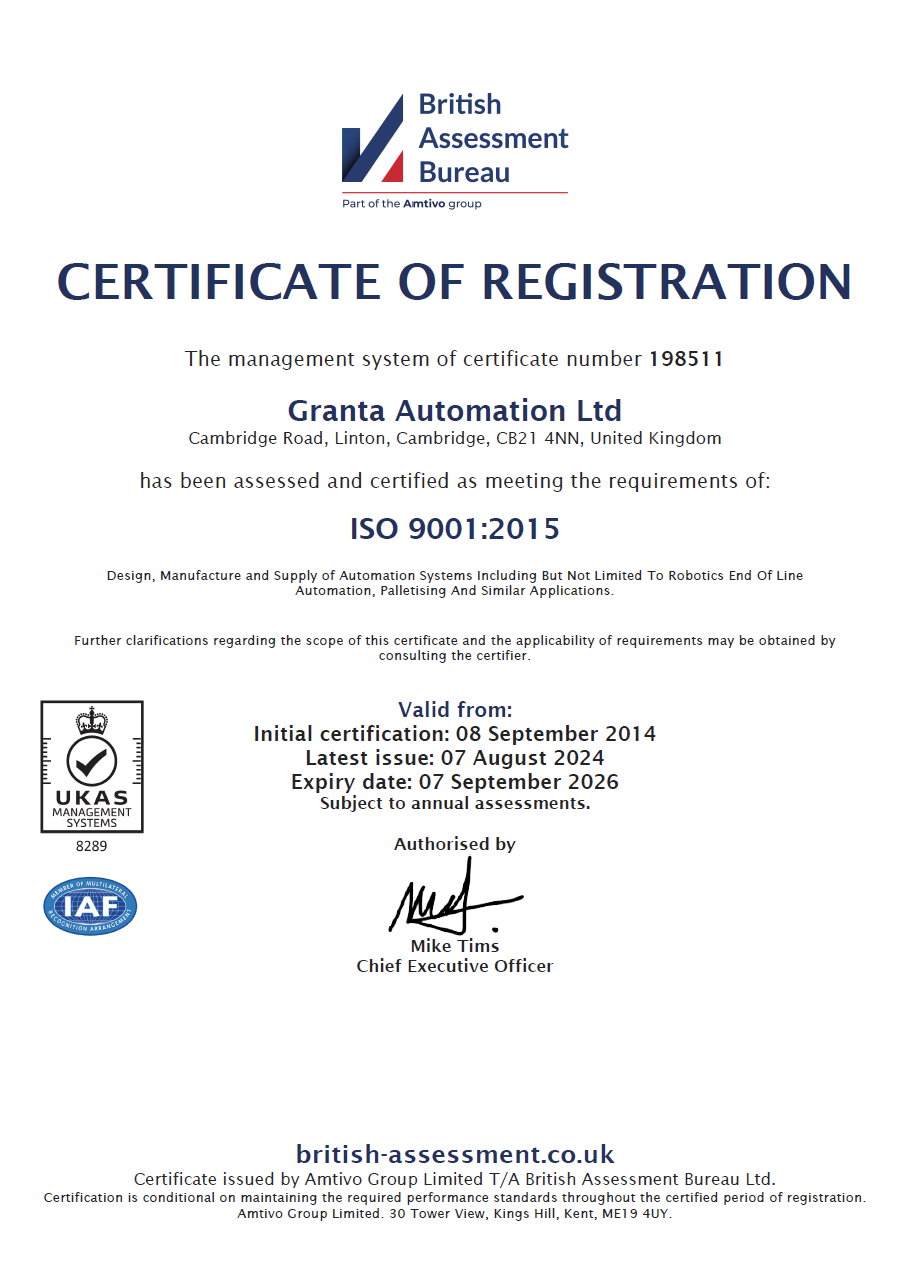
Is Granta ISO certified?
Yes - Granta is ISO 9001 certified.
Are you NAPIT registered?
Yes - Granta is NAPIT registered, supporting our electrical compliance.
Who is responsible for safe use after installation?
We deliver a compliant, documented, guarded system with a technical file; as the operator you're responsible for safe use (for example under PUWER in the UK), and our training and documentation make that straightforward.
Do you help with health & safety documentation?
Yes - systems come with a comprehensive user manual, compliance pack and process signage, and our systems remove manual handling, which helps reduce H&S claims to zero.
›The quoting process (before you order)
How do I get a quote?
Get in touch or use our online tools. We'll usually arrange a free site visit, produce CAD drawings and a detailed proposal, and work with you to reach the best possible solution at the best possible price.
Do you visit our site before quoting?
Yes - for most projects we visit your site to understand your product, line, space and requirements before we design and quote.
Will I get drawings with my quote?
Yes - we produce CAD drawings and a detailed proposal so you can see exactly what's being proposed and how it fits your space.
How quickly will I get a quote?
We pride ourselves on a fast quoting process - timescales depend on the complexity of the system, and we'll keep you informed.
Do you help work out the best solution?
Yes - we work with you to refine the design to your needs and budget, rather than simply quoting a fixed package.
Do quotes include finance options?
Yes - leasing and hire options are included in every quote so you can see the finance route alongside the outright price.
Is there any cost to get a proposal?
No - the site visit, feasibility and proposal are provided free, and we also offer a free product trial.
›The project process (after you order)
What happens after I place an order?
We follow a clear, Prince 2-based project roadmap: Diaspec phase, detailed product specification (signed off), prepare for manufacturing, assembly at Granta, commissioning at Granta, your Factory Acceptance Test, install and production commencement, and support contract set-up.
What is the Diaspec phase?
It's the detailed specification stage at the start of the project, where we work through and agree the exact product specification before manufacturing begins.
What is a Factory Acceptance Test (FAT)?
Before your system leaves us, it's assembled and commissioned at Granta and you carry out a Factory Acceptance Test - checking it performs as specified - so there are no surprises on site.
How do you manage projects?
With a Prince 2 project-management system, a live online project-progress tracker and weekly email reporting, so you always know where your project stands.
Will I get regular updates during the project?
Yes - weekly email reports plus a live online progress tracker keep you updated throughout.
Can you keep our production running during installation?
Yes - we plan for it, with contingency options such as temporary extra conveyoring, splitting the install, temporary extra staff, volume testing at Granta beforehand, and arranging extra storage.
Do you help us communicate the project to our staff?
Yes - we provide a free internal marketing pack (pull-up banner and literature) answering staff questions like 'what's coming, why, will I lose my job, how will this benefit me, and what to expect during install' - tailored to your project.
Will the system be tested before it reaches us?
Yes - it's assembled and commissioned at Granta and volume-tested before installation, and you sign it off at the Factory Acceptance Test.
›Installation & commissioning
How long does installation take?
It depends on the system and is specified in your proposal. On-site installation and commissioning typically runs in two key stages, each around one to five days depending on the system.
How fast can you install a system?
We quote realistic lead times but usually beat them - a simple system can be installed within two months of order, and when everything aligns we've gone from order to installed in under two weeks.
What are your typical lead times?
As a guide: prebuilt 1–2 months, cobot 2–4 months, and compact or modular 4–6 months - and we typically beat these. The modular system's plug-and-play design keeps lead times short.
What happens during installation?
There are two key stages. Stage 1 (mechanical) needs no production apart from a few sample boxes or bags. Stage 2 needs intermittent full-speed production so engineers can test and fine-tune - by the end, production is running smoothly.
How much of our production is needed during commissioning?
Very little at first - just a few samples for the mechanical stage - then intermittent full-speed production during the final commissioning stage so the system can be tested and adjusted.
Do you install nationwide?
Yes - we install and support systems across the UK and Ireland with our own engineers.
Will the robot be fixed or removable?
Most systems are fixed in place; the modular system can be reconfigured and extended. We'll confirm the best arrangement for your site.
›Training
Do you provide training?
Yes - training is included as part of installation, covering both operations and engineering staff, with test and certification.
What does the training cover?
Classroom training (safety, program overview, scenarios and fault conditions, plus a knowledge quiz); practical training on the system (cell walk-round, demonstration, and each person setting up their own programs); and a knowledge test with certificates issued.
Is there advanced training for engineers?
Yes - optional advanced training covers advanced programming options, all hardware, detailed fault diagnostics and routine maintenance checks.
Do operators get certificates?
Yes - training includes a knowledge test, trainee acknowledgement and issued certificates.
Is training on site or off site?
Training is delivered as part of the installation process on site, so your team learns on the actual system.
Is there ongoing training material?
Yes - we provide a comprehensive user manual and training material, and can support your team's ongoing learning.
›Support, service & maintenance
Do you offer a support contract?
Yes - our standard support package includes three service visits per year, plus on-site and remote support.
Is support UK-based?
Yes - in-house UK service and support from the team that built your system.
Do you offer remote support?
Yes - systems can be connected by ethernet or Wi-Fi so our engineers can often diagnose and resolve issues remotely, reducing downtime.
Is 24/7 support available?
Support contracts can be arranged up to 24/7 cover depending on your needs - talk to us about the right level.
How often are service visits?
The standard support package includes three service visits per year, with options to increase cover.
Do you supply spare parts?
Yes - we supply spares and can provide a suggested spares list, and can integrate with your stock system where useful.
What does a service plan or call-out cost?
It depends on the system and the level of cover you choose - we set this out clearly in your proposal, and many visits are covered by the support contract.
Will the controls become obsolete?
We build on current, long-life KUKA and Yaskawa robots, PLCs and HMIs with extended manufacturer support, and we advise on lifecycle and recommended spares so your system stays supportable for years.
Can you connect via Wi-Fi or ethernet for assistance?
Yes - the system can be linked by ethernet or Wi-Fi so we can connect remotely to assist when needed.
›AMRs (Autonomous Mobile Robots)
What is an AMR?
An Autonomous Mobile Robot - a driverless robot that moves pallets and loads around your site with no fixed track, planning its own route and avoiding obstacles.
What can your AMRs carry?
Up to 1,500 kg, depending on the model.
How quickly do AMRs charge?
Fast - under two hours to full charge, with a 20–80% top-up in under an hour, and up to around ten hours of runtime.
How are AMRs deployed?
On a no-code, AI-driven platform - they can be configured and operational within about 48 hours, with automatic rack recognition to speed integration.
How do AMRs navigate safely?
Using SLAM navigation with 360° laser scanners and 3D cameras for people and object detection, plus a safety bumper, acoustic and optical alerts and multiple emergency stops. If the path is blocked, the AMR routes around the obstacle automatically.
Can you run a fleet of AMRs?
Yes - KUKA.AMR fleet management coordinates multiple AMRs (including mixed types and brands), with real-time monitoring.
How accurate are the AMRs?
High precision - positioning to millimetre-level accuracy using ground-texture odometry and QR positioning (around ±5 mm).
What power supply do AMRs need?
A standard single-phase supply - no special power required - with Wi-Fi and 5G connectivity.
How fast do AMRs travel?
Up to around 1.8 m/s unloaded and 1.5 m/s loaded, with velocity-dependent safety fields that grow with speed.
›AGVs (Automated Guided Vehicles)
What is an AGV?
An Automated Guided Vehicle - a driverless vehicle built on proven forklift technology that moves pallets along set routes, in automatic or manual mode.
How are AGV routes set up?
You simply pull the AGV around the environment to scan and map it, then set up routes - which are easy to modify later.
How does the AGV navigate?
Using a 360° field of view that detects its surroundings, allowing it to manoeuvre continuously along the planned routes.
Can the AGV be operated manually too?
Yes - it has a dual mode, working automatically or manually as needed.
Is the AGV easy to use?
Yes - a user-friendly touch interface gives a full overview of the AGV's workflow and system information from a computer, tablet or phone.
Is the AGV quick to install?
Yes - quick installation and commissioning, and easy to integrate into existing environments.
›Accessories & integration
Can you add pallet wrapping?
Yes - stand-alone and inline pallet wrappers are available, with features such as a small footprint, auto film start, easy film change and auto film cut and weld.
Can you add labelling?
Yes - labelling can be integrated into a system, including on container unloading lines.
What other equipment can you integrate?
A range of additional products - barcode readers, loading-dock and mobile container-unloading boom conveyors, auto-measuring systems, flex conveyors, box tapers and overhead or inline wrappers.
Can the system feed empty pallets automatically?
Yes - automatic pallet feeders and slip-sheet stacks can be included so empty pallets and slip sheets are handled without manual input.
Can you integrate with our existing line or systems?
Yes - our systems are designed to integrate with your production line, and can connect to stock or data systems where useful.
Can the system collect production data?
Yes - systems can log production and downtime data and generate reports, helping you track OEE and improve the line.
›Cost, payback & finance
How much does a robotic palletiser cost?
Bespoke systems are quoted to your line and application. Our standardised prebuilt palletiser is openly priced from £57,900 + VAT.
What's the typical payback?
Payback is often less than a year, thanks to labour saving, the production increase (typically ~40%) and reduced HR and H&S costs. Our calculators give a figure for your line.
Do you offer leasing?
Yes - leasing is included in every quote. We've partnered with a leasing company so you can spread the cost, and you start saving over and above the lease payments from the day the system is installed.
How does the leasing scheme work?
Typically a three-year lease. Your production-cost savings usually exceed the lease payments from day one, and at the end of the term the palletiser becomes yours for a nominal 1% fee.
Do you offer hire options?
Yes - all our quotes come with leasing and hire options so you can choose the route that suits your business.
Will a palletiser really pay for itself?
For most installs, yes - typically within a year once you count the production increase, redeployed labour, reduced manual-handling claims and lower HR costs, none of which are included in the basic lease-versus-savings comparison.
Can you help build the business case?
Yes - we provide payback, ROI, OEE and intangible-benefits calculators, and work through the numbers with you so the payback is clear.
Are you the cheapest option?
We focus on being the best value - the right solution at a competitive price, backed by patented software, both robot-maker partnerships and full UK support. We're often more competitive than comparable suppliers.
›Getting started
How do I start a palletising project with Granta?
Get in touch for a chat, a free product trial or a free site visit. We'll assess feasibility, produce drawings and a proposal, and work with you to design the best solution at the best price.
Can you trial my product first?
Yes - send us your product and we'll set a system up and show you it being palletised, so you have proof before committing.
Can I book a site visit?
Yes - we're happy to arrange a free site visit and feasibility assessment.
What information do you need from me?
Details of your product, throughput, line and available space are a great start - and a site visit lets us capture the rest.
How do I contact Granta?
Call 01223 499488, email helpline@granta-automation.co.uk, or use the enquiry and tools on our website.
No questions match that search. Try another word, or ask us directly.
Still have a question?
Send us your product and we’ll show you it palletised — or just ask. We’re happy to help.

1 Year Payback
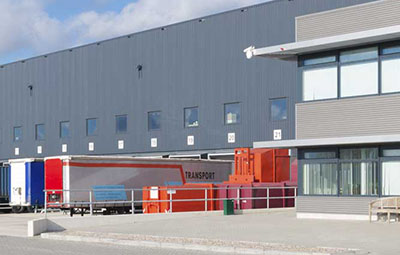
Payback is often less than 1 year due to labour saving, production increase, reduced HR.
+40% Production Increase
Typically +40% due to: no holidays or breaks, forced takt time, longer working hours, faster speeds etc.
Zero H&S Claims
H&S claims reduced to zero as all manual handing is now done by the robotic palletiser.

- You can verify our ISO 9001 certificate by entering certificate number 198511 via this link: www.british-assessment.co.uk/verify
- Finalist – MLR Networks Best Use of Robotics, 2025 Supply Chain Excellence Awards.