Container unloading, also known as destuffing, is one of the few operations in a modern supply chain still carried out almost entirely by hand.
A container is opened, and two or three people work inside it, lifting cases onto a pallet or a conveyor. The work is heavy, the space is confined, and in summer the internal temperature is uncomfortable. It is among the most difficult jobs on any site to recruit for and retain.
The reason it has remained manual is technical rather than commercial, and that reason has now largely been removed.
Why container unloading resisted automation
A palletiser at the end of a production line handles one product size for a long production run. A container does not present product in that form.
A single container may hold several different case sizes. The sequence in which they appear depends on how the container was loaded, which is outside the receiving site’s control. Mixed and part-loads are routine.
On a conventional palletiser, each new case size requires a new stack pattern and, with it, new robot paths, clearances and speed profiles. Setup takes hours or days and requires a robot programmer. Applied to a container holding six case sizes, the programming time exceeds the unloading time by a wide margin.
This is why the operation remained manual. The constraint was changeover time, not the handling itself.
How an automated container unloading system is configured
The basic arrangement uses a boom conveyor that extends into the container. Product is placed onto the conveyor and carried out to a palletising cell, where it is stacked automatically.
The system is designed around the site’s requirements and can include:
- Pallet stretch wrapping, inline or standalone
- Labelling
- Automatic pallet feeders and slip-sheet stacks
- Barcode reading
- Loading-dock or mobile boom conveyors
Palletising speed is matched to the process. Standard pick-and-place is used where throughput allows; layer forming is used where higher rates are required.
The programming requirement
Because a container presents a changing product size, the practical question is how the system is set up for each one.
Granta’s palletising software is configured by entering four dimensions: length, width, height and weight. From these it generates the viable stack patterns, ranks them by pallet efficiency, and derives the robot paths, clearances, safety zones, speed profiles and the orientation and grouping of product on the infeed conveyors. Setup for a new case size takes approximately five minutes and requires no robot-programming skill.
For container unloading, the automatic programming option is generally the more relevant configuration. A laser measuring system measures each case as it travels along the conveyor, identifies a change in size, generates the new stack pattern and continues stacking on a single confirmation press.
This is what makes automated palletising of a mixed container practical. The system adapts to the case sizes as they emerge, rather than requiring them to be known and programmed in advance.
What the operation looks like once automated
The manual task is reduced to placing cases onto the boom conveyor inside the container. Everything downstream — conveying, stacking, wrapping, labelling and pallet handling — runs without intervention.
The measurable effects are:
- Heavy repetitive lifting reduced to a single, lighter transfer at the container face
- Consistent unloading rate, unaffected by shift length or temperature
- Square, stable pallets built to an optimised pattern and ready to wrap
- Fewer people required for a job that is persistently hard to staff
- Reduced demurrage exposure where container turnaround is time-limited
Where pallets then have to be moved to storage or dispatch, AMRs and AGVs can carry out that movement, which removes the remaining forklift traffic around the dock.
Assessing whether it applies to your site
Automated container unloading is normally justified where several of the following are true:
- Containers are unloaded regularly rather than occasionally
- The work is currently done by hand, by two or more people
- The dock area has, or can be given, space for a palletising cell
- Container turnaround time is a commercial constraint
- The role is difficult to recruit for or has high turnover
The case sizes involved do not need to be consistent, and do not need to be known in advance. That was the historical constraint, and it is the one that automatic programming removes. The wider manual handling case for automating heavy repetitive lifting is set out separately in Manual Handling Risks in Palletising.
Next steps
Granta is a UK specialist in automated container unloading systems and designs, builds, programmes and supports its palletising systems in the UK, as a KUKA Platinum System Partner and a Yaskawa partner, with record UK sales achieved for both.
We will visit your site free of charge and produce a 3D CAD layout of a system in your own dock area before any commitment is made.
Contact us on 01223 499488 or book a free site visit.
Watch automation videos…
Find out more…
- Is Your Warehouse Slowing Down? How to Spot Hidden Bottlenecks in Packing and Shipping
- The Granta Advantage: KUKA Platinum Status + Patented Software = Smarter Automated Palletising
- Why Granta Palletisers are the Preferred Choice for Contract Packers
- 5 Ways Automation Can Solve the UK’s Manufacturing Labour Shortage
- The Compact Palletiser: Big Performance in a Small Footprint
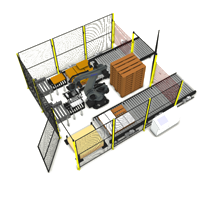 Bag Palletiser
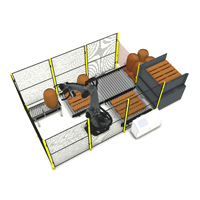 Barrel Palletiser
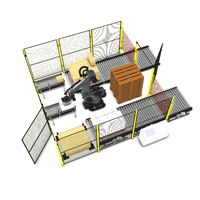 Box Palletiser
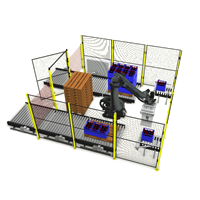 Crate Palletiser
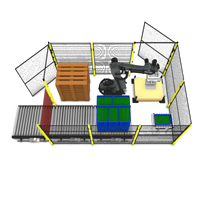 Tray Palletiser