Ask any production manager what keeps them awake at night, and sooner or later the conversation comes back to one number: throughput. How many units off the line per shift, per hour, per minute? It’s the figure that gets reported upwards, the one that determines whether an order ships on time, and the one that quietly decides whether a piece of automation was worth the investment.
So, when we talk about what we promise our customers, we don’t start with the kit. We start with that number. At Granta Automation, our approach is simple: we help our customers achieve with automation. That means delivering solutions that don’t just look good on paper, but consistently perform where it matters most – on your production line.
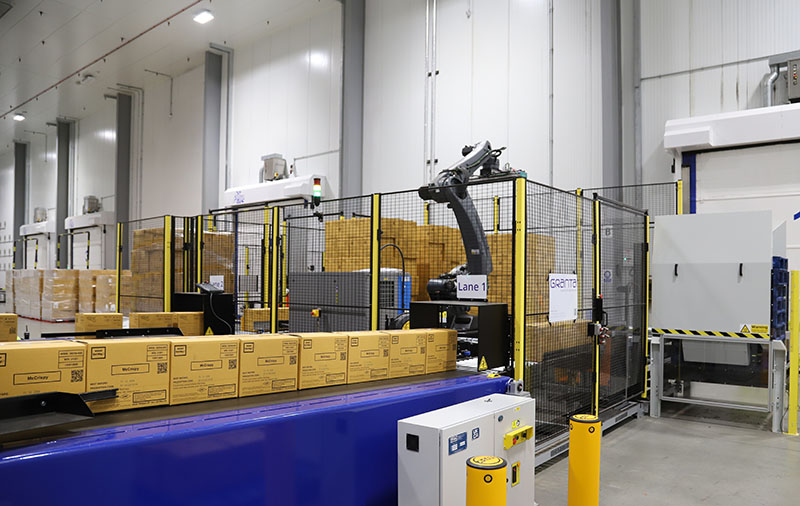
You’ve spent time and money getting product moving down the line at the rate you need. The last thing that should hold you up is the bit at the very end — stacking finished boxes onto a pallet. Yet end-of-line is exactly where a lot of production lines quietly lose pace, whether that’s a palletiser that can’t quite keep up with the box rate, or operators’ hand-stacking and tiring out as the shift goes on.
The palletiser shouldn’t be where your line slows down
A palletiser only earns its keep if it comfortably matches — and ideally outpaces — the rate boxes come off your line. That’s the standard we hold ourselves to. We’d rather supply a machine that keeps up every day, shift after shift, than one that looks fast on paper and then becomes the new bottleneck. Because for us, achieving with automation means making sure your investment delivers the throughput your business depends on.
Real throughput means sustained, reliable stacking
It’s easy to be impressed by a quoted cycle time. But a palletiser that handles a box quickly and then stops every twenty minutes for a misfeed or a toppled stack hasn’t solved anything. Real throughput is about steady, dependable output across a full shift.
That’s why we care as much about reliability as raw speed. Boxes vary — in size, weight, fill, and how square they sit. A machine that only performs when conditions are perfect isn’t much use on a busy production floor. We design and specify for the boxes you actually run, not the idealised ones, so the stack stays consistent and the line keeps moving.
We start by understanding your line, not selling you a machine
Before we recommend anything, we want to understand what’s coming off your line and how fast: your box dimensions and weights, the rate per minute, the pallet patterns you need, and how much that’s likely to change as your products do. We want to know where you are today and where you’re heading, so the palletiser we propose still fits in a couple of years’ time.
This matters because the right answer depends entirely on your numbers. A robust, achievable throughput target — agreed up front — is the difference between a palletiser that delivers and one that frustrates. It’s also how we make sure you achieve with automation from day one.
We design to your target
Once we agree on the rate you need to hit, that target shapes every decision: how the palletiser is configured, how product is fed and oriented into it, the pallet patterns, and the headroom we build in for real-world variation. We factor in the things that quietly erode output — product variation, planned and unplanned stops, changeovers between pallet patterns, and the gap between a machine’s theoretical speed and its actual availability.
Designing for genuine, sustained output rather than headline cycle time is what makes a throughput figure stick once the novelty wears off. It’s also how we ensure our customers continue to achieve with automation long after the machine has been commissioned.
We prove it before it leaves us
We don’t ask you to take our word for it. Wherever practical, we run factory acceptance testing so you can see the palletiser performing against the agreed numbers — with representative product — before it ever arrives on site. Then we validate it again during commissioning, on your floor, with your boxes, at your line speed.
That two-stage approach — prove it here, prove it there — means surprises get caught early, when they’re cheap to fix, rather than during a production ramp when they’re not.
And we stick around afterwards
A throughput figure isn’t something you hit once on day one and forget. Lines change, products change, and small issues compound if no one’s watching. Our commitment doesn’t end at sign-off. Through support, servicing, and a genuinely available phone line, we help you keep the palletiser doing its job for the long haul.
Because helping you achieve with automation isn’t just about installation day. It’s about making sure your investment continues delivering the performance you expected for years to come.
If something does go wrong, we want to be the people you call who actually pick up — not a name on an out-of-date contract.
A straightforward promise
We don’t think any of this should be remarkable. Helping you stack pallets fast enough to keep your line flowing is, quite simply, the job. But it’s surprising how often automation is sold on specifications rather than outcomes, and we’d rather be judged on the latter.
So that’s our commitment: we’ll be honest about what’s achievable, size the palletiser around the throughput that matters to you, prove it before and after installation, and stand behind it once it’s running. That’s what Achieve with Automation means at Granta Automation. It’s not just our strapline; it’s the promise that every automation solution we deliver is designed to help your business succeed.
If you’ve got a line that’s outpacing your end-of-line — or you’re still hand-stacking and feeling it — we’d be glad to have that conversation.
Get in touch with our team to talk through your line speed and the right palletising solution for it on 01223 499488 or email helpline@granta-automation.co.uk. You can also use our Palletiser Savings Estimator to get an indication of the return you could expect.
Watch automation videos…
Find out more…
- How Many AMRs Do I Require?
- Why Your Competitors are Faster: 3 Productivity Gaps in UK Warehousing
- Solving the Recruitment Crisis: Why Fewer Young Workers Are Choosing Manual Packing Roles
- Manual vs Automated Palletising: ROI & Cost Comparison Guide
- Why Staff Love Using Granta Easy Programming Palletiser Software
 Bag Palletiser
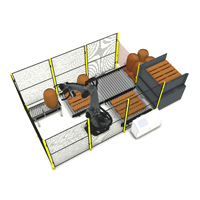 Barrel Palletiser
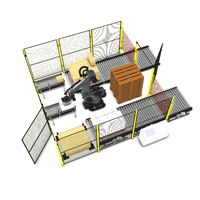 Box Palletiser
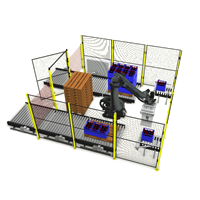 Crate Palletiser
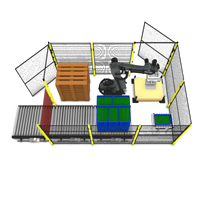 Tray Palletiser