Across the UK manufacturing sector, recruitment has become one of the more significant barriers to growth.
Whether producing food and drink products, pharmaceuticals, consumer goods or industrial components, many manufacturers are facing the same challenge: finding and retaining people for operational roles.
While labour shortages affect multiple areas of manufacturing, manual packing and end-of-line positions are often among the hardest jobs to fill. Vacancies remain open for longer, staff turnover can be high, and businesses are increasingly competing for a shrinking pool of candidates.
At the same time, a new generation is entering the workforce with different expectations, different priorities and more career options than ever before.
The result is a growing disconnect between the roles manufacturers need to fill and the types of jobs many young workers are actively seeking.
For businesses that rely heavily on manual packing operations, this presents a challenge that cannot be ignored.
A Changing Workforce
Every generation enters the workplace with different expectations, but today’s school leavers and younger workers have grown up in a fundamentally different environment.
Technology has become an integral part of everyday life. Digital skills are highly valued. Schools, colleges and careers advisers increasingly encourage students to pursue opportunities that offer development, progression and long-term career prospects.
Young people today are also exposed to a much wider range of employment opportunities than previous generations.
Alongside traditional manufacturing careers, they have access to:
- Apprenticeships across a wide range of industries
- Higher and further education pathways
- Technology and digital careers
- Service-sector opportunities
- Flexible and hybrid working environments
- Entrepreneurial ventures and self-employment
Against this backdrop, repetitive manual roles can struggle to compete for attention.
This doesn’t mean younger workers are unwilling to work hard, nor does it mean manufacturing has become unattractive. In fact, many young people are highly interested in engineering, robotics, automation and advanced manufacturing technologies.
The challenge is that they are often looking for careers that provide opportunities to learn, develop skills and progress over time.
Why Manual Packing Roles Are Becoming Harder to Fill
Packing remains an essential part of manufacturing and distribution operations.
Products still need to be packed, sorted, labelled, stacked and prepared for dispatch. However, many manual packing positions involve characteristics that can make recruitment increasingly difficult.
These roles often include:
- Repetitive tasks performed throughout a shift
- Physically demanding activities
- Limited day-to-day variation
- High-volume production targets
- Shift-based working patterns
- Fewer opportunities for technical skill development
For decades, businesses were generally able to recruit workers to perform these functions. Today, however, many manufacturers report that attracting younger candidates has become significantly more challenging.
When alternative employment opportunities offer greater flexibility, technology exposure or clearer progression pathways, manual packing roles can become a less attractive option.
As a result, recruitment pipelines are shrinking just as many manufacturers need additional capacity to support growth.
The Recruitment Challenge Goes Beyond Labour Shortages
It would be easy to blame the issue entirely on labour shortages, but the reality is more complex.
Manufacturers are facing a combination of long-term trends that are reshaping the workforce.
These include:
- An Ageing Workforce
Many experienced manufacturing employees are approaching retirement age, creating a growing need to replace skilled and semi-skilled workers. - Increased Competition for Talent
Manufacturing businesses are no longer competing solely with other manufacturers. Warehousing, logistics, retail, construction and service industries are all drawing from the same labour pool. - Changing Career Expectations
Many younger workers are seeking roles that provide learning opportunities, progression and personal development rather than simply offering stable employment. - Skills-Based Employment Markets
Employers increasingly value technical and digital skills, while younger workers are increasingly focused on acquiring them.
Together, these factors are creating a recruitment environment that looks very different from the one manufacturers operated in even ten years ago.
The Hidden Cost of Unfilled Packing Roles
When businesses cannot recruit enough people for manual packing operations, the consequences quickly spread throughout the organisation.
Labour shortages often lead to:
- Reduced Production Capacity
Production output can become constrained by staffing levels rather than equipment capabilities. - Increased Overtime Costs
Existing teams are frequently required to work additional hours to maintain output targets. - Higher Employee Fatigue
Persistent staffing shortages can place additional pressure on employees, increasing the risk of burnout and absenteeism. - Recruitment and Training Costs
The cycle of recruiting, onboarding and replacing staff can become expensive and time-consuming. - Inconsistent Performance
Manual processes can become more difficult to manage consistently when teams are under pressure or operating below ideal staffing levels.
For many manufacturers, these costs accumulate quietly over time, reducing efficiency and limiting growth opportunities.
Why Automation Is Becoming a Strategic Necessity
Historically, automation projects were often justified primarily through labour savings.
Today, the conversation has changed.
Many manufacturers are investing in automation because they can no longer rely on a steady supply of labour for repetitive operational tasks.
The question is no longer:
“How many jobs can automation replace?”
Instead, businesses are asking:
“How can we continue growing when recruitment is becoming increasingly difficult?”
Automation provides a practical answer.
By automating repetitive packing and palletising tasks, manufacturers can reduce their dependence on roles that are becoming harder to recruit for while improving operational consistency.
The Benefits Extend Beyond Recruitment
While labour availability may be the catalyst for automation investment, the benefits often extend much further.
Modern automated packing systems can help manufacturers:
- Increase throughput
- Improve packing consistency
- Reduce product handling errors
- Improve traceability
- Support workplace safety initiatives
- Operate more predictably during labour shortages
- Scale production more effectively
Unlike manual processes, automated systems deliver consistent performance regardless of labour market fluctuations.
This creates a more resilient operation capable of responding to changing customer demands.
Creating More Attractive Manufacturing Careers
One of the most overlooked benefits of automation is its ability to improve the quality of jobs available within a business.
When repetitive manual tasks are automated, employees can be redeployed into higher-value activities such as:
- Machine operation
- Quality assurance
- Production planning
- Process optimisation
- Equipment maintenance
- Continuous improvement initiatives
These responsibilities often align more closely with what younger workers are seeking from their careers.
Rather than spending entire shifts performing repetitive tasks, employees can develop technical skills that support long-term career progression.
For manufacturers looking to attract the next generation of talent, this can become a significant competitive advantage.
Future-Proofing Manufacturing Operations
The recruitment challenges facing UK manufacturing are unlikely to disappear overnight.
Demographic trends, changing workforce expectations and ongoing competition for labour suggest that businesses will need to adapt if they want to maintain productivity and growth.
The most successful manufacturers are increasingly recognising that automation and workforce development are not competing priorities; they are complementary strategies.
By automating repetitive tasks while investing in higher-skilled roles, businesses can create operations that are more productive, more resilient and more attractive to future employees.
As workforce expectations continue to evolve, automation is becoming more than a productivity improvement. It is an essential tool for building a manufacturing operation that is ready for the future.
If you’d like to understand what automated palletising could look like in your operation, get in touch with the Granta team or use our Palletiser Savings Estimator to get an indication of the return you could expect.
Watch automation videos…
Find out more…
- The Hidden Cost of Throughput: Why Is Staff Turnover So High in My Packing Department?
- Why “Made in the UK” Matters for Support and Spare Parts
- Why Granta Palletisers Are Designed to Deliver One of the Lowest Total Costs of Ownership (TCO) in the UK
- Why We Use KUKA Robots in Our Palletising Systems: Reliability and Lifespan You Can Trust
- 10 Automation Terms Every Engineer Should Know Before Upgrading Their Production Line
 Bag Palletiser
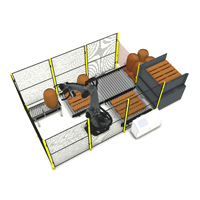 Barrel Palletiser
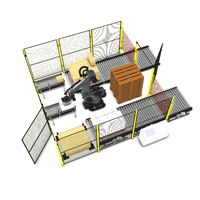 Box Palletiser
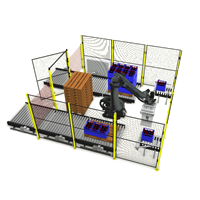 Crate Palletiser
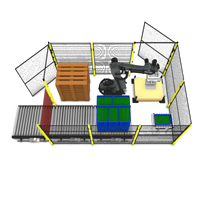 Tray Palletiser