As the leader of a growing food, beverage, or snack manufacturing business, your day-to-day reality likely revolves around two relentless pressures: skyrocketing operational costs and a persistent shortage of reliable labour.
When the packing hall is short-staffed, throughput drops, orders face delays, and growth stalls. At the end of the production line, manual palletising remains one of the most labour-intensive, injury-prone, and inefficient bottlenecks in your entire facility.
You know that automation—specifically a robotic palletiser—is the logical solution to stabilise your output and protect your margins. However, presenting an automation business case to the board or your financial stakeholders often hits a familiar roadblock: budget approval.
If the immediate reaction from the CFO or board is that “the payback period is too long” or “we need to preserve cash right now,” you need a different strategy. To secure approval, you must shift the conversation from a capital expense to a strategic, risk-free growth enabler.
Here is how to frame the business case to get a “yes” from senior management.
1. Shift from CapEx to OpEx (Preserve Working Capital)
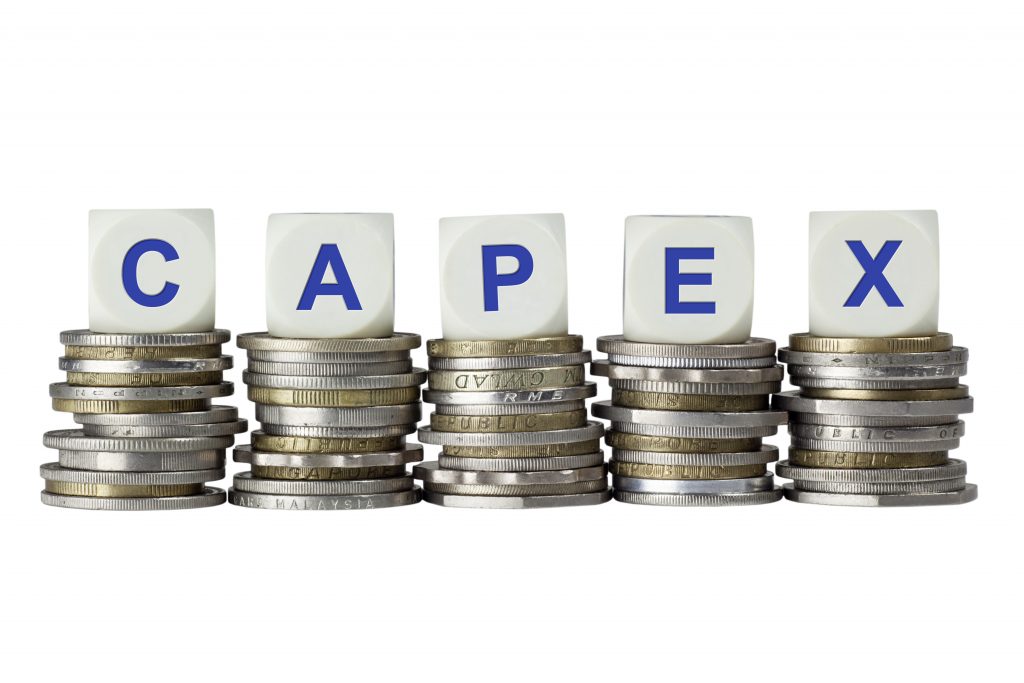
The traditional barrier to automation is the daunting upfront capital expenditure (CapEx). In a volatile market, senior leadership is naturally protective of cash reserves.
The breakthrough counterargument? You don’t need to buy it outright.
By leveraging flexible hire and lease options, you can transform an automation project into an operational expense (OpEx). This completely rewrites the financial narrative for senior management:
- Immediate Positive Cash Flow: The monthly lease payment for a robotic palletiser is often significantly lower than the monthly cost of manual labour, agency fees, and recruitment overheads. You save money from Day One.
- Zero Upfront Strain: The company retains its cash reserves for core business strategies, product R&D, or marketing, while the palletiser pays for itself through immediate efficiency gains.
2. Reframe the ROI: Factoring in the “Cost of Inaction”
When senior management argues that the payback period on a machinery purchase is too long, they are usually looking at a simple calculation: Cost of Machine ÷ Monthly Wages Saved.
To win budget approval, you must present the true, holistic Return on Investment (ROI) by highlighting the heavy Cost of Inaction (COI). Ask management to factor in the hidden drains on your current bottom line:
| The Hidden Costs of Manual Palletising | The Robotic Palletiser Solution |
| Recruitment & Agency Fees: Constant churn in low-skilled packing roles. | Predictable Operational Costs: Robots don’t call in sick or require agency premiums. |
| Ergonomic Injuries & Claims: Repetitive strain and back injuries from lifting heavy boxes. | Risk Mitigation: Drastically reduces workplace health and safety liabilities. |
| Product Giveaway & Bottlenecks: Human fatigue slows down lines during peak shifts. | Maximum Throughput: Consistent, 24/7 end-of-line speed keeps up with processing lines. |
When you add the costs of recruitment, product damage, and missed growth opportunities due to labour caps, the “long payback period” quickly evaporates.
3. De-Risk the Future with Modular Scalability
Another major anxiety for senior leadership is the fear of obsolescence. Why invest in a fixed automation system today if your product packaging, contract terms, or factory layout changes in two years?
The solution to this objection is future-proofing through modularity.
Granta’s modular palletising systems are specifically designed to evolve with your business. When presenting to the board, you can assure them that this is not a rigid, single-purpose machine, but a flexible asset:
- Add as You Grow: You can start with a baseline configuration that solves your immediate labour bottleneck today.
- Easy Modification: If you introduce new packaging formats, bag sizes, or stack patterns in the future, the system can be easily modified and added to.
- Asset Protection: The investment is protected against market shifts because the hardware adapts to your changing production needs.
The Bottom Line for Leadership
Securing budget approval isn’t about convincing the board that robots are efficient—they already know that. It’s about proving that automation can be adopted without draining cash reserves, that it safeguards the business against labour volatility, and that the system is flexible enough to grow with the company.
By presenting a modular system backed by a low-risk leasing model, you aren’t asking management to take a massive financial gamble. You are presenting them with a low-risk, cash-flow-positive strategy to protect your margins and scale production.
Ready to build a bulletproof business case for your end-of-line production?
Contact us today on 01223 499488 to explore our flexible hire and lease options, and see how our modular palletisers can fit seamlessly into your growth plans.
Watch automation videos…
Find out more…
- The Hidden Cost of Throughput: Why Is Staff Turnover So High in My Packing Department?
- Why “Made in the UK” Matters for Support and Spare Parts
- Why Granta Palletisers Are Designed to Deliver One of the Lowest Total Costs of Ownership (TCO) in the UK
- Why We Use KUKA Robots in Our Palletising Systems: Reliability and Lifespan You Can Trust
- 10 Automation Terms Every Engineer Should Know Before Upgrading Their Production Line
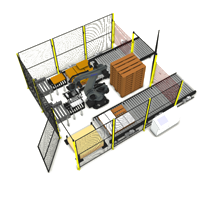 Bag Palletiser
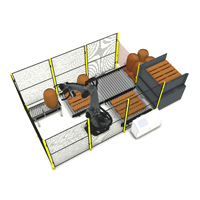 Barrel Palletiser
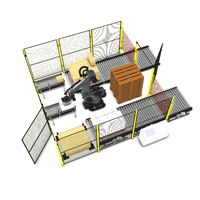 Box Palletiser
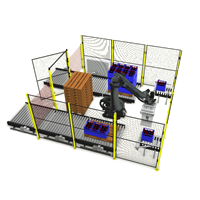 Crate Palletiser
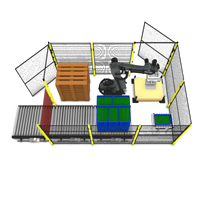 Tray Palletiser