Machines don’t talk—but if you know their language, you can make them do almost anything. From stacking pallets to keeping production lines humming, automation comes with its own vocabulary—some of it intimidating, some of it essential. Knowing the right terms can save hours of troubleshooting, avoid expensive mistakes, and help you get the most out of equipment like robotic palletisers. Here are ten you should have in your back pocket.
1. PLC (Programmable Logic Controller)
Think of the PLC as the control center of your production line. It’s what tells motors, sensors, and conveyor belts what to do—and when to do it. Palletisers rely on PLCs to move boxes with precision and keep your line running smoothly.
2. HMI (Human-Machine Interface)
The HMI is the “dashboard” you actually want to look at. It turns all the signals, alerts, and data from your machines into a clear, interactive display, so you can spot problems before they become production-stopping headaches.
3. SCADA (Supervisory Control and Data Acquisition)
SCADA systems are like your plant’s nervous system. They collect and visualise data from machines, letting you track performance, spot inefficiencies, and plan maintenance before something breaks. For palletisers, this means fewer surprises and higher throughput.
4. Servo Motors
Servo motors handle the heavy lifting when it comes to precise motion. On a palletiser, they control robotic arms, lifts, and grippers, making sure boxes end up exactly where they should—every time.
5. Conveyor Systems
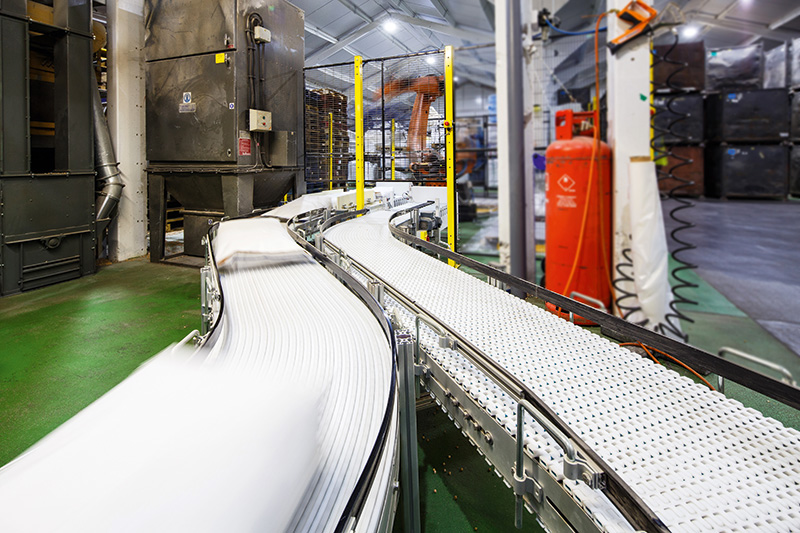
Conveyors are the arteries of your production line. Understanding belt types, speeds, and load capacities is essential if you want your palletiser to stack without jams or slowdowns.
6. Industrial Sensors
Sensors are your machines’ senses. Proximity switches, photoelectric detectors, and vision cameras help your palletiser “see” boxes, detect orientation, and avoid collisions—keeping both products and operators safe.
7. Actuators
Actuators are what turn instructions into action. In your palletiser, they drive lifts, clamps, and arms, converting PLC commands into smooth, reliable movement.
8. Plug-and-Play
Plug-and-play describes equipment that can be installed and start working with minimal setup. In automation, this means sensors, actuators, or even entire palletising systems can be connected, recognised by the control system, and operate immediately—without complex programming or calibration. For engineers, plug-and-play components simplify installation, reduce downtime, and make it easier to upgrade or expand production lines as needs change.
9. IoT (Industrial Internet of Things)
IoT brings connectivity to your production line. Machines, sensors, and PLCs talk to the cloud, enabling remote monitoring, predictive maintenance, and smarter decision-making that keeps your palletiser running at peak efficiency.
10. Cycle Time
Cycle time is the clock on your production process. The shorter the cycle without sacrificing safety or quality, the more boxes your palletiser stacks—and the more profitable your line becomes.
Why Knowing These Terms Matters
Automation isn’t just a set of machines—it’s a system. Engineers who speak the language of PLCs, HMIs, sensors, and servo motors can make smarter decisions, troubleshoot faster, and communicate clearly with vendors.
If you’d to discuss your requirements for palletising solutions, feel free to contact us on 01223 499488 or helpline@granta-automation.co.uk and we will be happy to help.
Watch automation videos…
Find out more…
- Is Your Warehouse Slowing Down? How to Spot Hidden Bottlenecks in Packing and Shipping
- The Granta Advantage: KUKA Platinum Status + Patented Software = Smarter Automated Palletising
- Why Granta Palletisers are the Preferred Choice for Contract Packers
- 5 Ways Automation Can Solve the UK’s Manufacturing Labour Shortage
- The Compact Palletiser: Big Performance in a Small Footprint
 Bag Palletiser
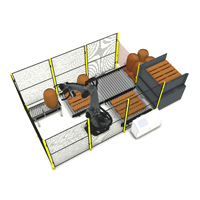 Barrel Palletiser
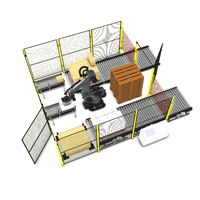 Box Palletiser
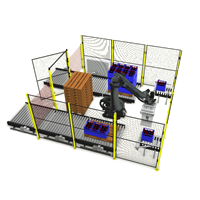 Crate Palletiser
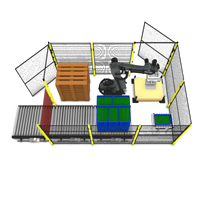 Tray Palletiser