
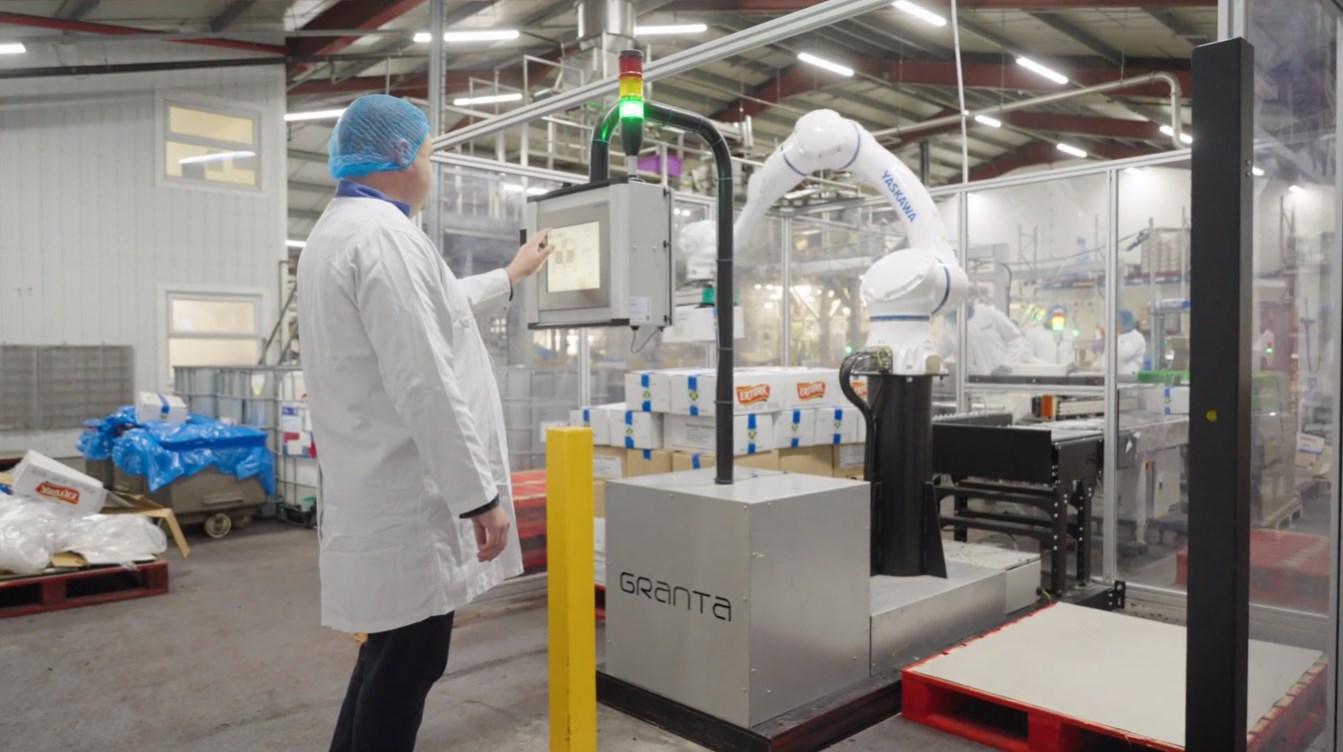
How robotics, AI, and smart machines are tackling workforce challenges in British industry
Across the UK, manufacturing continues to struggle with labour shortages that threaten productivity and growth. Recent workforce data show tens of thousands of unfilled manufacturing jobs – with manufacturers calling the lack of workers the top barrier to growth. [Skills England Report]
At the same time, automation and AI adoption is rising, offering a clear pathway to mitigate workforce shortfalls, enhance productivity, and reshape the future of industrial work.
1. Using Automation to Address Persistent Labour Gaps
Skilled labour — such as precision machine operators, technicians, and engineers — remains in high demand in UK manufacturing. A significant portion of job vacancies are classed as skills shortages, especially in advanced manufacturing sectors.
Automation — including robotics, AI‑assisted tools, and smart machinery — can take on repetitive, precision‑dependent work. These tools don’t replace skilled humans but allow them to focus on higher‑value decision and problem‑solving tasks.
This dynamic aligns with the UK government’s projections in the AI Skills for Life and Work labour market report, which forecasts rising demand for AI‑related and technical roles across industries. [UK Gov]
2. Boosting Productivity When Labour Cannot Keep Pace
Even with recent drops in job vacancies, labour remains hard to attract and retain. Meanwhile, automation systems can operate continuously, reducing bottlenecks and maintaining output. Robots and AI‑enabled systems enhance precision, allow for 24/7 operation, and integrate predictive maintenance — all boosting overall productivity.
Recent data indicate that manufacturers are planning capital investment in robotics and automation, reflecting longer‑term commitments beyond short‑term labour fixes.
3. Reducing Dependence on Temporary or Overseas Labour
In the past, UK firms often relied on overseas or temporary hiring to fill seasonal peaks. With current immigration regimes and competition for skilled labour across sectors, this strategy is increasingly unreliable. Automation helps smooth peaks and troughs in demand without costly turnover and recruitment cycles.
4. Enhancing Workplace Safety and Job Satisfaction
Automation isn’t just about efficiency — it also improves workplace safety by taking on hazardous or physically intensive tasks. This shift reduces injury risk and allows human workers to focus on oversight, quality assurance, and innovation.
Positive worker sentiment toward automation supports this transition; many UK manufacturing employees report that automation is not a threat but an opportunity to improve how they work.
5. Creating New Career Pathways Through Upskilling and AI Skills Growth
Automation doesn’t eliminate work so much as transform it. As new systems are adopted, demand grows for technicians, data analysts, AI supervisors, and automation maintenance specialists. Investing in upskilling is now integral to closing labour gaps while preparing workers for future‑ready roles.
The government’s AI Skills for Life and Work projections underscore the importance of AI and digital skills in the decades ahead — highlighting both opportunity and urgency for workforce development.
Conclusion: Towards Resilience and Renewal
The UK’s manufacturing labour shortage reflects broader trends — demographic shifts, skills mismatches, and global competition for talent. Automation offers a powerful, practical response: enhancing productivity, reducing routine labour burdens, and enabling workers to perform fulfilling, higher‑value roles.
By combining automation with strategic upskilling and workforce planning, British industry can not only solve labour shortages but also build a more resilient, competitive, and innovation‑driven manufacturing sector.
If you’d to discuss your requirements for palletising solutions, feel free to contact us on 01223 499488 or helpline@granta-automation.co.uk and we will be happy to help.
Watch automation videos…

Find out more…
- Driving Operational and Financial Excellence in Manufacturing: A Comprehensive Guide
- Planning for 2026: How Granta Automation Can Transform Your Operations with Palletisers and AMRs
- Which Palletiser System Is Best for Palletising Boxes?
- Common Pitfalls in Scaling Manufacturing Operations
- What is an Automated Guided Vehicle (AGV) and What are the Benefits of Investing in One?
 Bag Palletiser
 Barrel Palletiser
 Box Palletiser
 Crate Palletiser
 Tray Palletiser