
Picture your production line as a new palletiser comes online. Operations are excited about the efficiency gains, while finance is weighing the impact on budgets and long‑term planning. Should the equipment be purchased outright, rented, or leased?
For many UK manufacturers, this decision shapes cash flow, strategic flexibility, and how quickly automation can be deployed. At Granta Automation, we help businesses navigate these options to find the solution that best fits their needs.
Understanding Your Financing Options
1. Rental / Operating Lease
A rental or operating lease gives you access to automation equipment without the need for upfront capital. Payments are typically monthly or quarterly, turning a capital purchase into an operating expense.
Why rental works well:
- Protects cash flow
- Easy to upgrade or change equipment
- Predictable budgeting
Points to consider:
- Higher cumulative cost over long periods
- No ownership
- Contract limitations for early changes
2. Capex / Purchase
Purchasing automation equipment outright adds it to your balance sheet as a fixed asset. This is often preferred by manufacturers with stable production volumes and long‑term investment plans.
Key advantages:
- Full ownership
- Capital allowances and depreciation
- Lowest lifetime cost for long‑life equipment
Points to consider:
- High upfront investment
- Obsolescence risk
- Maintenance responsibility
3. Leasing (Finance Lease)
Leasing is one of the most popular routes for Granta customers, offering a balance between affordability and long‑term ownership. Unlike rental, leasing allows you to own the palletiser at the end of the term for a small nominal fee, while still benefiting from low monthly payments.
Why leasing is so effective:
- Immediate access to automation
- Fast return on investment
- Predictable monthly payments
- Preserves cash flow
- Quick finance decisions
- Simple agreements
At the end of the lease, the palletiser can be purchased for a small nominal fee, allowing you to continue benefiting from the equipment for many years.
Financing Options Comparison Table
| Rental / Operating Lease | Leasing (Finance Lease) | Capex / Purchase | |
| Upfront Cost | Low | Low | High |
| Ownership | No | Yes (end of term) | Yes |
| Balance Sheet Impact | Operating expense | Finance agreement | Asset added |
| Cash Flow Impact | Minimal | Minimal | Significant initial impact |
| Long‑Term Cost | Highest | Medium | Lowest |
| Maintenance Responsibility | Often included | Typically customer | Customer |
| Ideal For | Rapid scaling, short‑term needs | Cash‑flow‑sensitive long‑term users | Stable long‑term operations |
Which Approach Fits Your Business?
The right choice depends on your growth plans, cash position, and how quickly your production environment evolves. The scenarios below give you some example cases and the best fit solution.
Scenario A – Fast‑Growing Start‑Up
A new food packaging company needs automation immediately to keep up with demand. Leasing allows them to install a palletiser now, maintain cash flow, and benefit from predictable monthly payments while they scale.
Scenario B – Established Manufacturer
A multi‑site beverage producer wants consistent processes across all plants. Purchasing core automation equipment provides long‑term cost stability and asset value, while leasing additional equipment helps them expand capacity without large upfront spend.
Many manufacturers often use a hybrid strategy:
- Lease equipment that delivers long‑term value but needs to be cash‑flow friendly
- Rent equipment that may need regular upgrading
- Purchase core assets with long service life
To support your decision, these tools can be used to estimate the potential savings from a palletiser system and its likely payback period.
- Palletiser Savings Estimator – https://www.granta-automation.co.uk/palletiser-savings-estimator
- Automation Project Payback Calculator – https://www.granta-automation.co.uk/automation-project-payback-calculator
Automation isn’t just a technical upgrade — it’s a strategic investment. In many cases, leasing the system results in a monthly cost that’s significantly lower than the savings it generates, meaning you start saving money from day one. Choosing the right financing route ensures your business can scale efficiently, manage costs, and stay competitive, and we’re here to support you through every step of that decision process.
If you’d to discuss you requirements for palletising solutions, feel free to contact us on 01223 499488 or helpline@granta-automation.co.uk and we will be happy to help.
Watch automation videos…
Find out more…
- Driving Operational and Financial Excellence in Manufacturing: A Comprehensive Guide
- Planning for 2026: How Granta Automation Can Transform Your Operations with Palletisers and AMRs
- Which Palletiser System Is Best for Palletising Boxes?
- Common Pitfalls in Scaling Manufacturing Operations
- What is an Automated Guided Vehicle (AGV) and What are the Benefits of Investing in One?
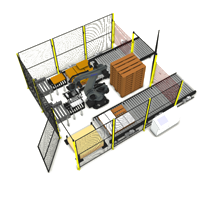 Bag Palletiser
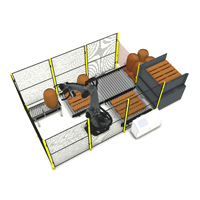 Barrel Palletiser
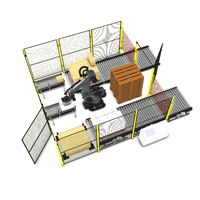 Box Palletiser
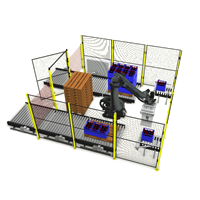 Crate Palletiser
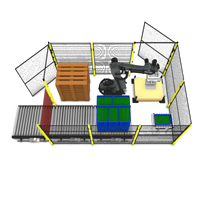 Tray Palletiser