
In today’s highly competitive manufacturing and logistics landscape, efficiency isn’t just a nice-to-have—it’s a business-critical factor. Every minute lost in the warehouse, every misaligned process, and every damaged product directly affects profitability, customer satisfaction, and your ability to scale.
Yet, many warehouse operations run “as usual” without realising there are hidden inefficiencies quietly undermining productivity. Teams work hard, shipments get out the door, but subtle bottlenecks quietly erode performance. If you’ve noticed delays, frequent errors, or your team constantly playing catch-up, it’s time to take a step back and look at your operations through a new lens.
Even if you’ve never considered automation, the right insights today could transform the way your warehouse works tomorrow.
The Invisible Costs of a Slow Warehouse
Most warehouse managers are aware of obvious inefficiencies—like a broken forklift or a mismanaged inventory system—but the truly costly problems are often hidden in plain sight. These “silent bottlenecks” don’t always show up in daily reports but compound over time, leading to wasted labour, higher error rates, and slower delivery times.
Consider these hidden costs:
- Labour fatigue and injury risk: Manual handling of heavy products not only slows productivity but increases the likelihood of accidents and workers’ compensation claims.
- Product damage: Inconsistent stacking and rushed packing lead to broken goods, returns, and reputational damage.
- Wasted space: Poorly organised pallets reduce storage density, forcing you to expand your warehouse footprint unnecessarily.
- Missed deadlines: Small delays in packing can cascade, resulting in late shipments and dissatisfied customers.
Even a small inefficiency can escalate into a major problem during peak periods. The difference between a warehouse that runs “okay” and one that runs optimally often comes down to the ability to identify and eliminate these hidden bottlenecks.
Common Hidden Bottlenecks in Packing and Shipping
Understanding where inefficiencies arise is the first step to solving them. In most warehouses, bottlenecks emerge in predictable areas:
1. Manual Handling Slows Everything Down
Manual stacking, lifting, and transporting pallets is inherently slow and inconsistent. Workers are capable, but human limits mean errors, fatigue, and delays are unavoidable.
For example, stacking boxes manually often leads to uneven pallets that are less stable and harder to move with forklifts. Over time, these small inefficiencies add up: extra time spent restacking, repositioning, or recovering damaged goods.
Even highly trained teams can’t match the speed and precision of a machine designed specifically for repetitive pallet stacking.
2. Inconsistent Pallet Patterns
Without a standardised stacking pattern, pallets vary in size, shape, and stability. This inconsistency affects everything from forklift handling to storage optimisation.
A poorly stacked pallet can:
- Reduce storage density
- Cause safety hazards
- Increase the risk of product damage
- Slow down the shipping process
While staff often improvise to “get it done,” these workarounds are a sign of a system that could be more efficient and predictable.
3. Labour Challenges
High turnover and seasonal staffing issues are major pain points for warehouses. When manual processes dominate, training new staff takes time, and mistakes are inevitable.
Even a small error can cause significant downstream effects: incorrect pallet stacking can lead to mis-picks, shipping delays, or damaged goods. In contrast, automated systems maintain consistency regardless of who is operating them.
4. Limited Throughput During Peak Periods
Seasonal spikes, bulk orders, or urgent last-minute shipments often reveal the limitations of a manual process. A warehouse that seems sufficient under normal conditions may collapse under pressure.
Bottlenecks at packing and palletising stages become obvious during these times. Shipments slow down, deadlines are missed, and staff morale can take a hit as teams scramble to keep up.
5. Inefficient Use of Floor Space
Space is money. Inefficient stacking and storage reduce the usable footprint of your warehouse, leading to congestion, longer travel times, and wasted labour.
Poor space utilisation often shows up as:
- Overcrowded aisles
- Frequent pallet reshuffling
- Difficulty accessing high-demand products
- Slower order fulfilment
Optimising floor space is not just about fitting more product—it’s about creating flow and predictability in your operations.
How to Identify Bottlenecks Early
Spotting bottlenecks before they become critical requires a combination of observation, analysis, and staff input. Here are practical steps:
- Walk the workflow: Track materials from production to shipping. Look for repeated pauses or areas where work slows down.
- Engage your team: Operators often know the workarounds used to cope with inefficiencies. Their insights are invaluable.
- Analise your metrics: Monitor packing speed, shipment delays, and error rates. Small dips or spikes often indicate deeper issues.
- Simulate peak demand: Test operations under high-volume scenarios to identify where processes fail or slow.
The goal is not to assign blame but to uncover structural issues that technology and process improvements can solve.
The Hidden Solution: Automating Pallet Stacking
Once you’ve mapped your workflow and identified bottlenecks, a common theme emerges: manual pallet stacking is often the limiting factor. This is where automation, particularly palletisers, can make a transformational difference. The benefits are substantial:
- Speed and throughput: Machines stack pallets faster than any human, keeping pace with peak demand.
- Consistency: Each pallet is uniform, stable, and ready for shipping, reducing errors and damage.
- Labour efficiency: Staff can focus on higher-value tasks such as inventory management, quality control, or shipping oversight.
- Scalability: As order volumes grow, palletisers scale effortlessly, ensuring operations remain smooth.
Even warehouses that appear to “run fine” often discover immediate ROI once palletisers are introduced. Reduced errors, faster shipments, and better space utilisation combine to improve both productivity and profitability.
How to Get Started
Transitioning from manual to automated pallet stacking doesn’t have to be overwhelming. Here’s a practical roadmap:
- Map your current workflow: Identify where delays and errors occur. Quantify the time and cost impact.
- Run a pilot: Even a single palletiser can reveal significant operational improvements.
- Measure results: Track throughput, error rates, labour hours, and product damage.
- Scale strategically: Gradually expand automation to additional lines or warehouses as ROI becomes clear.
The goal is not to replace your team—it’s to empower them. Automation handles repetitive, heavy, or time-sensitive tasks, giving your staff the bandwidth to focus on higher-value activities.
Future-Proofing Your Warehouse
Warehouses that invest in automation are better positioned for growth. The benefits extend beyond speed:
- Improved accuracy and predictability reduces customer complaints and returns.
- Optimised space usage delays the need for costly facility expansion.
- Flexible, scalable processes adapt to evolving product lines or order volumes.
- Higher staff satisfaction by reducing repetitive manual labour and physical strain.
Inefficiencies in your warehouse rarely appear overnight—they build up slowly, silently draining resources. By paying close attention to manual bottlenecks, analysing workflow metrics, and exploring automation solutions like palletisers, you can reclaim lost productivity, improve safety, and future-proof your operations.
Your warehouse doesn’t have to work harder—it just needs to work smarter. And in a world where speed, accuracy, and flexibility define competitive advantage, smarter warehouses win. In short, automation doesn’t just solve today’s bottlenecks—it prepares your warehouse for the challenges of tomorrow.
If you’d to discuss your requirements for palletising solutions, feel free to contact us on 01223 499488 or helpline@granta-automation.co.uk and we will be happy to help.
Watch automation videos…
Find out more…
- Driving Operational and Financial Excellence in Manufacturing: A Comprehensive Guide
- Planning for 2026: How Granta Automation Can Transform Your Operations with Palletisers and AMRs
- Which Palletiser System Is Best for Palletising Boxes?
- Common Pitfalls in Scaling Manufacturing Operations
- What is an Automated Guided Vehicle (AGV) and What are the Benefits of Investing in One?
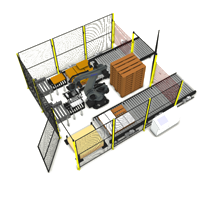 Bag Palletiser
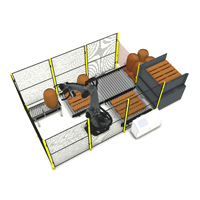 Barrel Palletiser
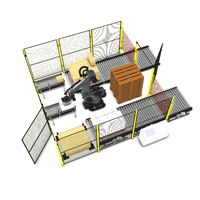 Box Palletiser
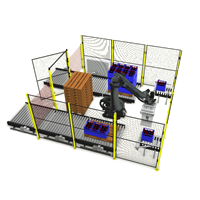 Crate Palletiser
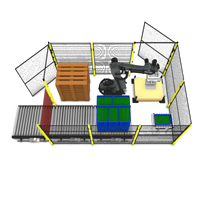 Tray Palletiser