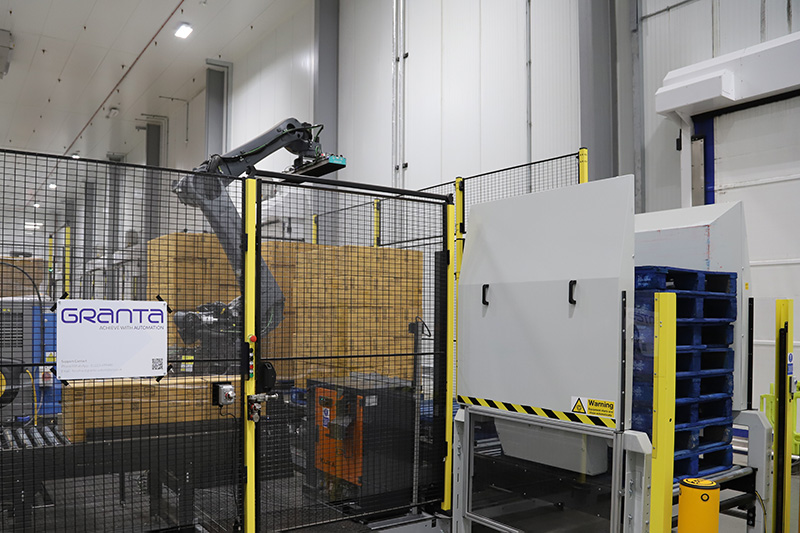
When planning a palletiser installation, one of the first questions is often: “How long will it take before everything is fully operational?” The answer depends on the type of palletiser system being installed, the complexity of the system and the product being palletised, plus any additional equipment being integrated. Setting realistic expectations helps you plan production, allocate resources, and avoid unnecessary delays.
This guide breaks down typical installation times for some of the most commonly used palletising systems, the factors that influence them, and the final steps required before your palletiser goes live.
Palletiser Installation Timelines by System Type
Different palletiser systems come with different installation demands. Here’s a practical overview giving the typical times required for each stage of installation:
| Palletiser Type | Mechanical & Electrical Installation | Commissioning | Total Installation Time |
| Cobot Palletiser | 1–2 days | 1 day | 2–3 days |
| Static Palletiser | 2 days | 2 days | 4 days |
| Compact Palletiser | 4–5 days | 3–4 days | 7–9 days |
| Large Modular Palletiser | ~1 week | ~1 week | 2+ weeks (variable) |
Additional Factors That Can Extend Installation
Row Grip Picking Technology
Depending on the product type and handling complexity, a palletiser system with row grip functionality will typically require an additional 1–2 days to install.
Infeed Conveyors
Infeed conveyors are often the most variable part of any installation. Depending on the number, length, and complexity of the infeed systems, installation time can increase by:
- 0.5 days to 4–5 days, with
- ~1 day per infeed being a common average.
Precise alignment and testing are essential to ensure smooth product flow.
Automated Mobile Robots (AMRs)
Integrating AMRs adds flexibility but also installation time. Each AMR system typically requires:
- 5 days for installation
- 1–2 days for commissioning and testing
Final Steps Before Commercial Production
Once installation and commissioning are complete, two final steps ensure your system is ready for full operation:
- Operator Training Ensures your team can run the palletiser safely and efficiently.
- Customer Production Commencement (CPC) Confirms the system meets the agreed production specification and is ready for production.
After training and CPC approval, the palletiser can be used for commercial production without Granta Automation on-site.
FAQs About Palletiser Installation
Q: How long does a cobot palletiser take to install? A: Usually 2–3 days, including commissioning.
Q: Can installation timelines change? A: Yes. Additional features such as row grip product picking, multiple infeed conveyors, or AMR integration can extend the timeline.
Q: What’s the timeline for large modular palletisers? A: Typically around 2 weeks, but this varies based on the systems complexity and site conditions.
Q: When can I start commercial production? A: After installation, commissioning, operator training, and a successful CPC.
Conclusion
Understanding the expected installation timeline for a palletiser helps you plan production, allocate resources, and avoid unexpected delays. While cobot systems offer rapid deployment, larger modular solutions require more time and flexibility. Factoring in additional equipment—such as conveyors or AMRs—ensures your project plan is realistic and free from surprises.
If you’d to discuss your requirements for palletising solutions, feel free to contact us on 01223 499488 or helpline@granta-automation.co.uk and we will be happy to help.
Watch automation videos…

Find out more…
- Is Your Warehouse Slowing Down? How to Spot Hidden Bottlenecks in Packing and Shipping
- The Granta Advantage: KUKA Platinum Status + Patented Software = Smarter Automated Palletising
- Why Granta Palletisers are the Preferred Choice for Contract Packers
- 5 Ways Automation Can Solve the UK’s Manufacturing Labour Shortage
- The Compact Palletiser: Big Performance in a Small Footprint
 Bag Palletiser
 Barrel Palletiser
 Box Palletiser
 Crate Palletiser
 Tray Palletiser