Palletising automation is a strategic priority for manufacturers and logistics operators looking to reduce labour costs, improve workplace safety, and increase output at the end of their production lines. As businesses continue to streamline their operations, the choice between collaborative robots (cobots) and traditional industrial robots has become a key decision point. Each technology offers distinct advantages, and understanding these differences is essential for selecting the most effective solution.
At Granta Automation, we specialise in designing palletising systems that align with each customer’s operational goals. By evaluating factors such as throughput, payload, safety, flexibility, and available floor space, we help businesses identify the palletising approach that delivers the greatest long‑term value. This article explores how cobots and industrial robots compare and provides guidance on choosing the right system for your production environment.
Cobots vs Industrial Robots: Understanding the Core Difference
Cobots are engineered to work safely alongside human operators. Their integrated force‑sensing technology allows them to detect unexpected contact and stop immediately, enabling safe operation without the need for fixed guarding in collaborative mode. This makes cobots particularly well‑suited to environments where people and automation must work in close proximity.
Industrial robots, by contrast, operate within fully safeguarded cells. This controlled environment allows them to run at significantly higher speeds and handle heavier payloads, making them ideal for high‑volume, high‑duty palletising applications where maximum throughput is essential.
When to Choose a Cobot Palletiser
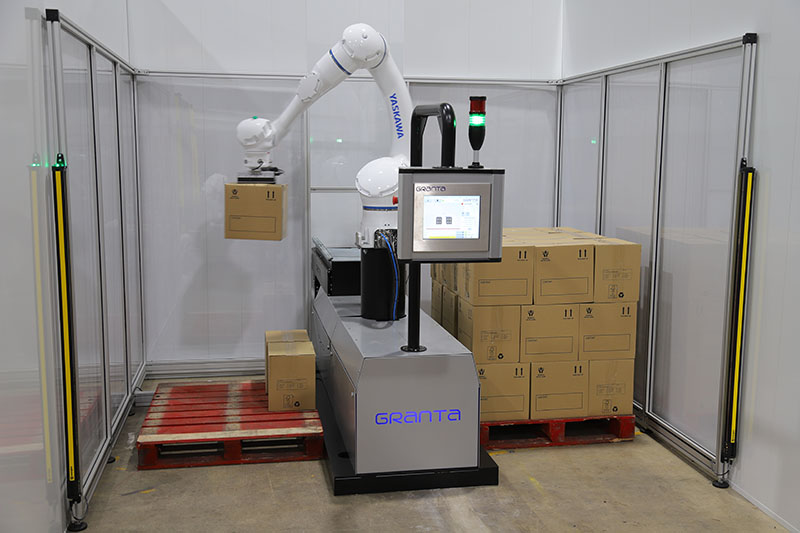
Cobots offer a compelling blend of safety, flexibility, and ease of deployment. They are especially valuable in operations where products are lightweight and human interaction is frequent or product lines change regularly.
- Built‑In Collaborative Safety
Cobots are designed with advanced force‑sensing capabilities that allow them to operate safely near people. In collaborative mode, they automatically slow or stop when interaction is detected, supporting safer workflows without the need for fixed guarding. - Dual‑Mode Operation for Enhanced Productivity
A major advantage of Granta’s cobot palletisers is their ability to operate in both collaborative and industrial modes. When paired with additional safety systems—such as guarding, light curtains, or safety scanners—cobots can run at full industrial speeds until a person enters the safety zone. They then automatically switch to collaborative mode, maintaining safety without compromising productivity. - Compact Footprint and Rapid Deployment
Cobots are typically smaller and easier to integrate into existing production lines enabling fast installation, minimal disruption, and seamless integration into space‑constrained facilities. Portable cobot palletiser systems are also available from Granta, enabling you to move the system between different production lines. - Intuitive Programming and Fast Changeovers
Granta’s easy programming software enables operators to set up new products, adjust pallet patterns, and modify configurations quickly without the need for specialist programming knowledge. This makes the system fast and easy to reprogram for operations with frequent product changes or short production runs. - Flexible Safety Configurations
Cobots can be deployed with a range of safety setups:- Collaborative‑only operation (no guarding)
- Guarding with light curtains for full‑speed operation until the curtain is breached
- Safety scanners for dynamic switching between industrial and collaborative speeds
- Ideal for Agile, Mixed‑Product Environments
Cobots excel in operations where product types, pallet patterns, or production demands change frequently. Their flexibility supports agile manufacturing strategies and rapid adaptation to new requirements.
When to Choose an Industrial Robot Palletiser
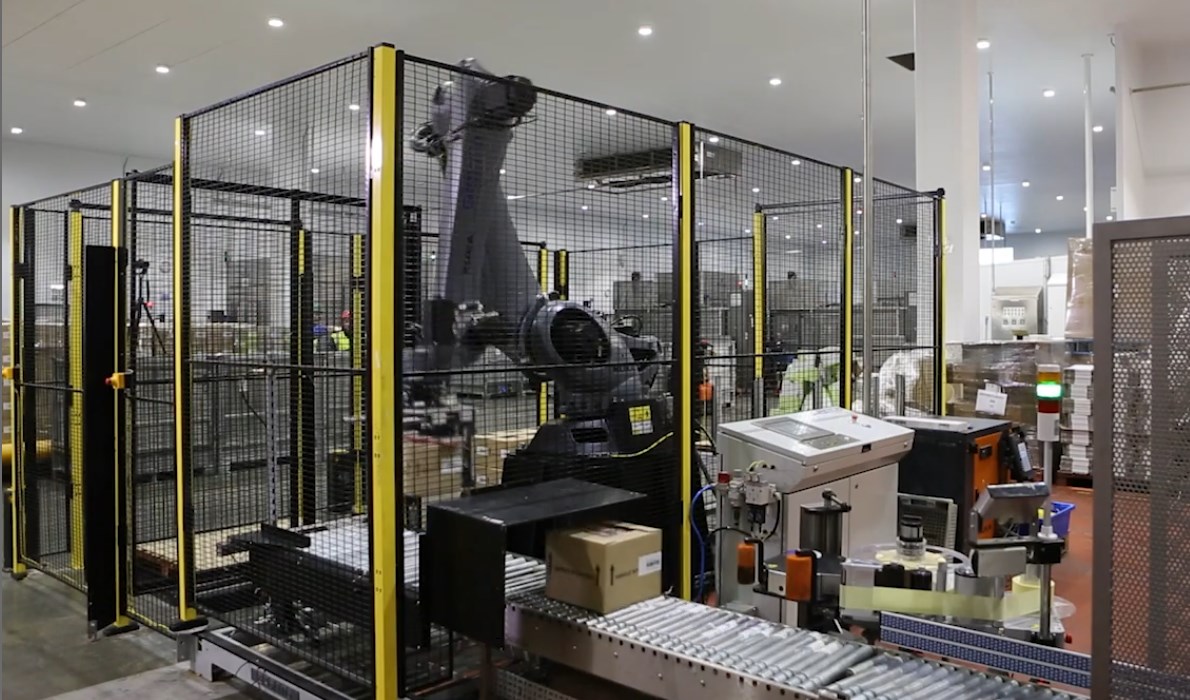
Industrial robots remain the preferred choice for high‑volume, heavy‑duty palletising applications where speed and payload capacity are critical.
- High Speed and Heavy Payload Capability
Industrial robots deliver the highest throughput and can handle significantly heavier loads than cobots. Granta’s industrial palletising systems are engineered for precision, consistency, and continuous duty, making them ideal for demanding, high‑output environments. - Robust Automation with Full Safeguarding
Operating within a guarded cell allows industrial robots to run at maximum speed without collaborative‑mode limitations. This ensures optimal cycle times and reliable, uninterrupted operation. - Advanced End‑of‑Arm Tooling / Gripper Options
Industrial robots support a wide range of grippers—including vacuum, under grip, row‑gripping, and layer‑forming tools—enabling high speed and efficient handling of complex or high‑volume palletising tasks. - Multi‑Line and Autonomous Operation
Industrial systems can be configured to service multiple production lines and operate with minimal human intervention, supporting fully autonomous palletising and maximising overall equipment effectiveness. Industrial palletisers can pick multiple product types from multiple lines, allowing a single system to manage high‑volume, mixed‑product workflows with consistent speed, accuracy and fully automated pallet formation. - Intuitive Programming and Fast Changeovers
Granta’s easy programming software enables operators to set up new products, adjust pallet patterns, and modify configurations quickly without the need for specialist programming knowledge. This is ideal for operations with frequent product changes or short production runs.
Key Factors to Consider When Choosing
Selecting between a cobot and an industrial robot depends on your operational priorities:
- Production Throughput
High‑volume operations typically benefit from industrial robots. Cobots with guarding can achieve comparable speeds while retaining collaborative flexibility. - Payload and Reach
Cobots generally handle lighter payloads with the Granta cobot able to handle a payload of 30kg, while industrial robots can handle 140 kg and support row or layer picking. - Safety and Human Interaction
Cobots are ideal where operators frequently work near the palletising area. Industrial robots suit isolated, high‑speed environments. - Flexibility and Changeovers
With the Granta easy programming system on all our palletising systems, both systems are well suited to rapid product changeovers, enabling operators to adjust pallet patterns, introduce new SKUs, and reconfigure layouts quickly without specialist programming knowledge. - Total Cost of Ownership
Cobots often provide lower initial investment and faster ROI for flexible operations, however a compact industrial robot palletiser can often be similar pricing to a cobot palletiser. Industrial robots deliver strong long‑term value in high‑output environments. Both systems can be hired or leased, eliminating the need for large upfront capital investment.
Cobot vs Industrial Robot: At‑a‑Glance Comparison
| Criteria | Cobot Palletiser | Industrial Robot Palletiser |
| Primary Strength | Flexibility, safety, ease of integration | High speed, heavy payloads, maximum throughput |
| Typical Payload | Low–medium (30kg) | Medium–very high (140Kg) |
| Operating Speed | Reduced in collaborative mode; full speed with guarding or safety | Full industrial speeds |
| Safety Approach | Built‑in force sensing; optional guarding | Guarded cell with safety interlocks |
| Human Interaction | Designed for close operator interaction | Minimal or no human presence |
| Footprint | Compact | Small to larger depending on the cell type |
| Programming | Intuitive, fast changeovers with the Granta easy programming software | Intuitive, fast changeovers with the Granta easy programming software |
| Throughput | Moderate–high | Moderate – Very high |
| Installation | Fast, minimal disruption | Dependent on the cell complexity but can be as quick as a cobot for low complexity cells |
| Total Cost of Ownership | Lower entry cost, fast ROI | Smaller cells have a low entry cost with fast ROI, larger cells have a higher initial cost with strong ROI at scale. |
How to Use This Comparison
If your operation requires flexibility, frequent changeovers, or close human–robot interaction, a cobot palletiser—especially one configured with guarding for higher speeds—offers an excellent balance of safety and productivity.
If your priority is maximum throughput, heavy payload handling, or fully autonomous operation, an industrial robot palletiser is the most robust and scalable solution.
At Granta Automation, we work closely with customers to evaluate both options and, where appropriate, design hybrid solutions that combine collaborative flexibility with industrial‑level performance.
Conclusion
There is no single “best” palletising solution—only the solution that best aligns with your throughput requirements, safety needs, product characteristics, available space, and long‑term operational strategy. Granta Automation’s approach is to match your operation with the system that delivers the greatest return on investment, whether that’s a flexible cobot palletiser or a high‑performance industrial robot.
If you’d like support in determining the right solution for your facility, our team is ready to help you assess your needs and recommend a tailored palletising system. Contact us on 01223 499488 or helpline@granta-automation.co.uk and we will be happy to discuss.
Watch automation videos…
Find out more…
- Driving Operational and Financial Excellence in Manufacturing: A Comprehensive Guide
- Planning for 2026: How Granta Automation Can Transform Your Operations with Palletisers and AMRs
- Which Palletiser System Is Best for Palletising Boxes?
- Common Pitfalls in Scaling Manufacturing Operations
- What is an Automated Guided Vehicle (AGV) and What are the Benefits of Investing in One?
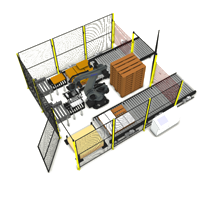 Bag Palletiser
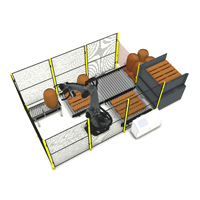 Barrel Palletiser
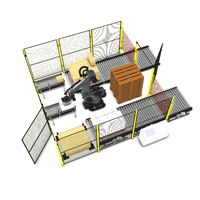 Box Palletiser
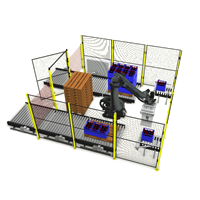 Crate Palletiser
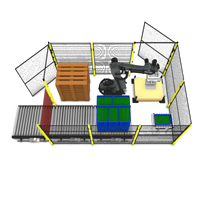 Tray Palletiser